

In the classrooms of Southwest Cameroon, women who were told their time to learn had passed are proving that wrong — one word, one lesson, one transformed family at a time.
She sat in the back row on the first day. Close to the door, far from the front, in the seat that gave her the easiest exit if she needed to leave quickly. She had walked past the classroom three times before she finally came inside. She was forty-one years old. She had never been to school.
She told the facilitator she was probably too old for this. She said her hands were better with a hoe than a pen. She said her children would laugh. She said she just wanted to see what it was like — just the one time.
That was eight months ago. Today, she reads to her youngest child every evening before bed. She keeps her own household budget in a notebook she carries everywhere. She has joined the women's savings group in her neighborhood and serves as its treasurer.
She has not missed a single class.
The Lie That Literacy Has an Age Limit
Somewhere along the way, many of us absorbed a quiet lie about learning — that it belongs to the young, that it happens in childhood or not at all, that the window for education opens at five and closes sometime before adulthood sets in fully. For women in rural communities across Southwest Cameroon, this lie has been especially costly.
Millions of women on this continent were not in classrooms as children — not because they were incapable, not because they lacked curiosity, but because the circumstances of their lives made it impossible. Early marriage. Poverty that demanded labor over schooling. Cultural expectations that placed a girl's future in a household, not a classroom. Conflict that interrupted everything. Caregiving responsibilities that fell heaviest on female shoulders from the youngest ages.
These were not personal failures. They were systemic ones.
And yet the consequences of missing that early window did not stay systemic — they landed personally, in specific women, in specific bodies, in specific daily lives. The inability to read a medicine label. The dependence on someone else to read a letter or a contract or a school report card. The silence in a meeting when numbers are discussed. The slow erosion of confidence that comes from navigating a literate world without literacy.
At Assertive Care Organization, we refuse to accept that this is where the story ends.
Because the truth — the real, evidence-backed, lived truth that we witness in our classrooms every single week — is that learning has no expiry date. The brain does not stop being capable of growth at twenty-five or thirty-five or fifty. The hunger to understand does not die because years have passed. The dignity that comes with being able to read your own name, to write your own letter, to count your own money — that dignity belongs to every woman, at every age, in every season of life.
What Brings a Woman Through the Door
Understanding why adult education transforms families requires first understanding what it costs a woman to walk through that classroom door.
It costs her something, always. It costs her the quiet voice in her head that has been telling her for years that this is not for her. It costs her the fear of sitting next to younger women and feeling behind. It costs her the negotiations at home — with a husband who may be skeptical, with children who need attention, with a schedule already stretched past its seams. It costs her the risk of vulnerability, of being seen struggling with something that others find easy.
And still, she comes.
She comes because something in her has refused to stop wanting. Maybe it is the memory of watching her daughter do homework and wishing she could help. Maybe it is the moment she handed a document to a neighbor to read for her and felt the sting of dependence. Maybe it is the dream she has carried quietly for decades of one day being able to write her own name without help.
Whatever brings her through the door, what ACO's adult education facilitators understand deeply is that she arrives carrying far more than a desire to learn. She arrives carrying history. She arrives carrying pride that must be honored before it can be relaxed enough to allow learning. She arrives with a lifetime of intelligence and resourcefulness that no classroom will be teaching her — that she is already bringing with her.
The job of our facilitators is not to fill an empty vessel. It is to welcome a full human being and offer her new tools for the wisdom she already possesses.
Inside the Classroom: Where Dignity Is the Curriculum
Walk into one of ACO's adult literacy classrooms in Buea and what you notice first is not what you might expect from a classroom. There is laughter. There are conversations that spill over the official topic of the day. There are women helping each other, leaning across tables, tracing letters together with concentration so intense it is almost tender.
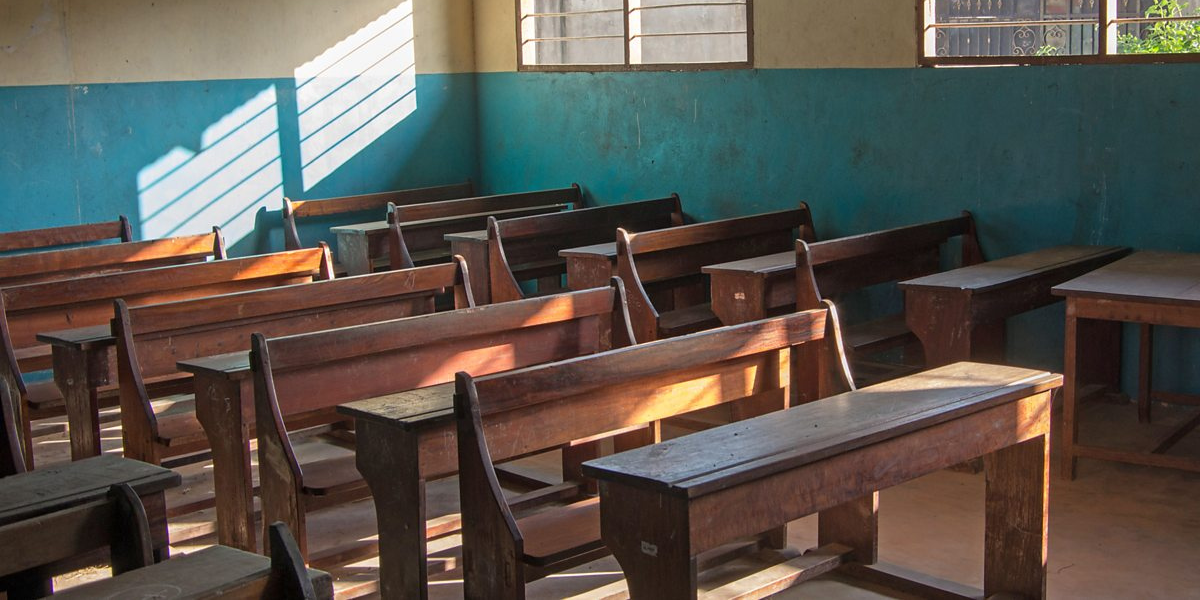
There is no shame in these rooms. That is by design.
ACO's adult education curriculum was not imported from somewhere else and fitted onto the realities of women in Southwest Cameroon. It was built from conversations with the women it would serve. It is structured around flexible schedules that accommodate farming cycles, market days, and caregiving responsibilities. It uses examples drawn from daily life — calculating the price of groundnut oil, reading a child's school report, understanding a health worker's instructions, navigating a banking form.
The learning is immediate and applicable. It does not ask women to absorb abstract knowledge and wait for it to become useful one day in an imagined future. It meets them exactly where their lives are and gives them tools they can use before the week is out.
But beyond the practical content of the curriculum, there is something else embedded in every session — something that no lesson plan fully captures but that every woman who attends eventually feels. It is the repeated, consistent, structured message that her presence matters. That her questions are worth asking. That her confusion is not stupidity but is simply the normal experience of encountering something new. That she has every right to be in this room, learning these things, at this point in her life.
This message — delivered not once, but week after week in the way facilitators speak to participants, in the way the classroom is organized, in the way women are asked to lead discussions and share knowledge and teach each other — is the real curriculum.
It is the curriculum of dignity.
The First Thing That Changes: She Starts Asking Questions
Literacy is a tool. But what literacy gives a woman in practice is something broader and harder to name. It gives her a new relationship with information — and therefore with power.
Before she could read, the world was divided into those who could access written information and those who depended on others to interpret it for them. She lived on the dependent side of that line. The instructions on her child's medication. The notice posted at the school gate. The terms of the loan she was offered at the market. The receipt from the buyer who purchased her crops. All of it passed through other hands before it reached her understanding.
This is not just inconvenient. It is a structural form of vulnerability. It exposes women to misinformation, exploitation, and exclusion from decisions that directly affect their lives.
As literacy grows — even in its early stages, even before a woman is reading fluently — something shifts in her relationship to these situations. She begins to ask questions she did not ask before. She reads labels slowly, sounding out syllables. She asks what a word means. She no longer simply accepts what she is told about a document; she wants to understand it herself.
This shift in posture — from passive recipient to active questioner — is one of the earliest and most significant transformations ACO's facilitators observe in participants. It happens quietly, usually without the woman herself fully recognizing it at first. But it changes everything about how she moves through her day.
The Second Thing That Changes: Her Children Watch
There is a classroom effect that no attendance register will ever capture, and it is this: the mothers who enter ACO's literacy program bring their children with them — not physically, but influentially.
When a child sees her mother studying, the message delivered is wordless and indelible. Learning is for people like us. Education belongs in this house. The person I most trust in this world believes that growing and knowing are worth the effort.
Mothers who are in education become different advocates for their children's schooling. They help with homework in ways they could not before. They communicate more effectively with teachers. They recognize the signs that a child is struggling academically and know what to do about them. They enforce attendance with the conviction of someone who knows firsthand what it costs to miss an education.
The evidence for this intergenerational effect is consistent and compelling. Children of mothers who participate in adult literacy programs show measurably higher school attendance and performance. Girls in these households are significantly more likely to complete their own education and to delay early marriage. The cycle that was interrupted in one generation begins to close in the next.
One woman who could not read. One classroom she chose to enter. Two or three children whose trajectories quietly bend toward education because of what they saw in her.
This is not metaphor. This is the mechanics of how change actually travels through families and communities.
The Third Thing That Changes: Her Voice in the Room
There is a particular kind of silence that educated women know and uneducated women know differently. It is the silence in a meeting when numbers are being discussed and you cannot follow them. It is the silence when a form needs to be filled and you cannot do it. It is the silence of knowing that your contribution to a conversation would be stronger if you could read the document being referenced.
ACO's adult education participants describe this silence vividly when they speak about their lives before the program. They describe stepping back from community meetings. Deferring to others on decisions they should have been part of. Feeling their confidence contract in literate spaces until they simply stopped entering those spaces at all.
What happens as literacy grows is not just that the silence becomes less frequent. It is that the woman's relationship to her own voice changes. She begins to speak in meetings, first tentatively, then with increasing steadiness. She joins savings groups and community associations. She stands for leadership in community structures she previously only watched. She advocates for her children in school settings with a specificity and confidence that comes from being able to read the reports and policies being discussed.
In several communities where ACO works, women who began as adult education participants have gone on to take up positions as community health advocates, cooperative leaders, and local committee members. Not because the literacy program made them capable of leadership — they always were — but because it gave them the tools to translate that capability into visible participation.
The classroom built a bridge between who they had always been and what the world could finally see.
What Families Gain When Women Learn
The case for investing in women's education has been made statistically and powerfully by researchers across decades and continents. Every year of education a woman receives correlates with higher family income, lower child mortality, better child nutrition, reduced household poverty, and stronger community economic outcomes.
These are aggregate truths. ACO's work lives in their specifics.
It lives in the household where a mother now manages the family budget herself, having identified for the first time that a local supplier had been shortchanging her on crop sales for years — and having quietly, firmly corrected it. It lives in the family where a woman's new ability to read medicine labels meant she caught a dangerous dosage error in medication prescribed for her infant. It lives in the home where a woman took the financial literacy modules of ACO's curriculum and started a small savings discipline that, over eighteen months, enabled her to invest in a piece of equipment that doubled her income from tailoring.
It lives in the children of these women — the ones attending school more consistently, performing better, dreaming larger.
These are not dramatic, headline-grabbing stories. They are the quiet, compounding, daily victories of a woman with new tools applying them to the life she already has. Multiplied across hundreds of households, they become a different kind of community — one where women are not peripheral participants in economic and civic life, but central ones.
The Courage No One Gives Enough Credit To
We speak often about the impact of adult education. We speak less often about the courage it requires.
It takes courage to walk into a classroom at forty and sit down with younger women. It takes courage to hold a pen that feels unfamiliar and make marks on paper while someone watches. It takes courage to read aloud in a group setting when the words come slowly and you are not certain you are right. It takes courage to go home after a long day of farming or trading or caregiving and open a notebook instead of resting.
It takes courage to tell yourself, after decades of being told otherwise, that you are still worth educating.
ACO's adult education program succeeds not because it has a perfect curriculum or because the facilitators are exceptional teachers — though both of these things are true. It succeeds because the women who enroll decide, over and over again, to be brave. Every session they attend is a small act of self-belief, repeated until it becomes a habit, until the habit becomes an identity, until the identity becomes something their daughters absorb and carry forward.
We do not take that courage for granted. It is the foundation everything else is built on.
The Question That Keeps Us Building Classrooms
Why does ACO invest in adult education when there are so many other urgent needs in Southwest Cameroon? The honest answer is that we do not see it as a choice separate from those other needs. Literacy is not a luxury alongside health and food security and economic resilience. It is woven through all of them.
A woman who can read navigates the health system more effectively. A woman who can manage her own finances is less vulnerable to food insecurity. A woman who has found her voice in a classroom finds it in a savings group, in a health clinic, in a conversation with her child's teacher, in a community meeting about water access.
Education does not solve every problem. But it changes the person at the center of the household, and when that person changes, the household changes with her, and when enough households change, the community around them is never quite the same again.
This is why we keep building classrooms. Not because we believe a classroom alone is sufficient — but because we have seen, again and again, what happens when a woman who was told her time to learn had passed decides not to believe it.
The thing she builds next cannot be predicted. That is precisely what makes it extraordinary.
She Is Still in the Back Row. But She Is Not Near the Door Anymore.
The woman who walked past the classroom three times before she came in has not stopped talking about the day she learned to read a full sentence on her own. She describes it the way people describe moments they know they will carry forever — with the particular brightness of something that changed the shape of a day so completely that everything before it looks different in retrospect.
She is still in the back row. Old habits settle slowly. But she is not near the door anymore. She is not looking for an exit. She is leaning forward, pencil in hand, watching the facilitator write the next word on the board with the expression of a person who has discovered, late and gloriously, that the world contains more than she was ever shown.
She is forty-one years old.
She has her whole life left to learn.
Assertive Care Organization's Adult Education and Women's Empowerment program runs literacy and numeracy classes, financial literacy training, and leadership development sessions for women across Buea and surrounding communities in Southwest Cameroon. To support or partner with this program, connect with us in Buea.

Leave a comment
Your email address will not be published. Required fields are marked *