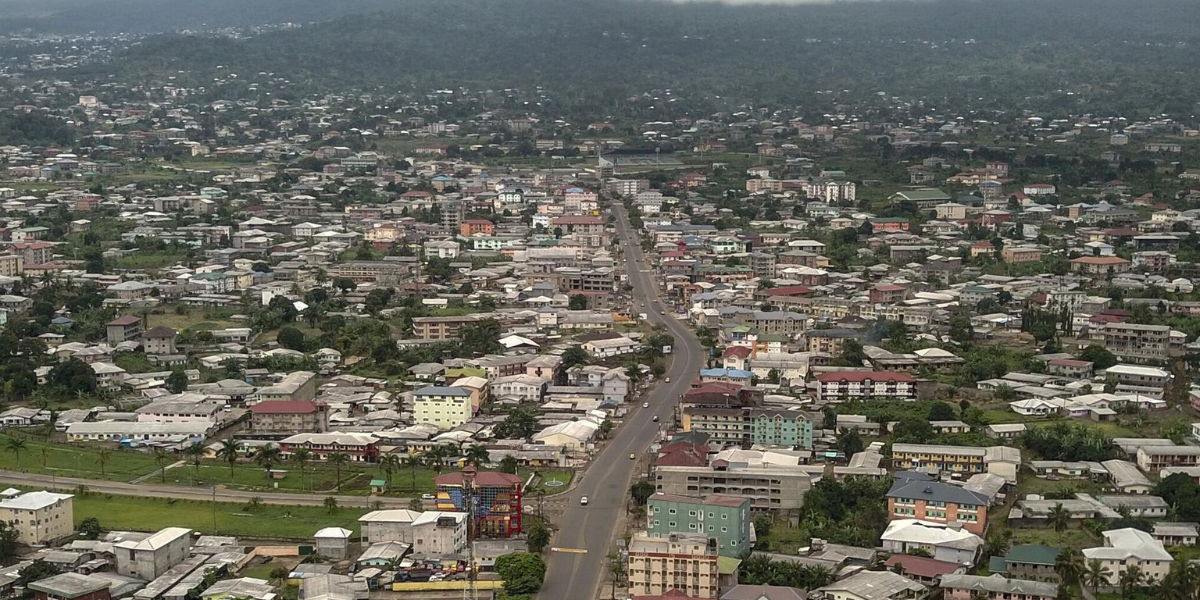
There is a version of Cameroon that the world rarely sees.
Not the one in the glossy tourism brochures — the majestic Mount Cameroon rising above the coast, the wildlife of Waza, the vibrant nightlife of Douala. And not the crisis-headline version either — the conflict zones, the displacement camps, the aid statistics.
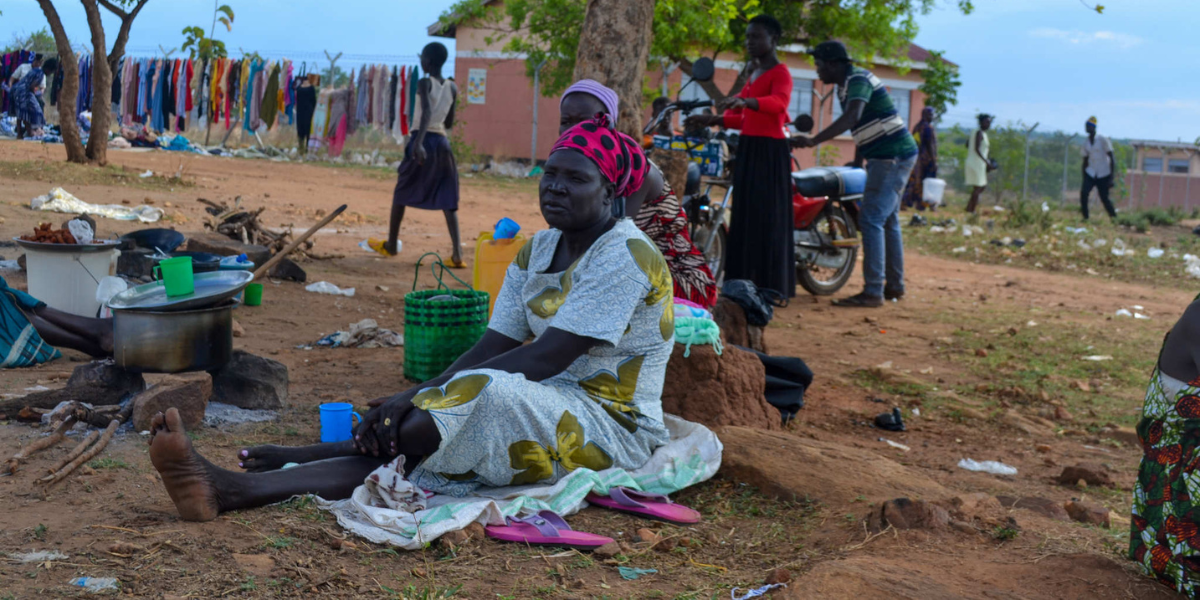
The version we are talking about is quieter than both. It lives in the face of a mother in a rural village who wakes before dawn to walk five kilometers for water that may still make her children sick. It lives in the hands of a twenty-year-old who finished secondary school with nothing but ambition and nowhere to put it. It lives in classrooms with no desks, in health posts with no medicine, in communities rich with humanity but stripped of the tools to turn that humanity into a future.
That is the real problem we are solving.
Not a single crisis. Not a single statistic. But the slow, grinding weight of structural disadvantage that tells millions of Cameroonians, every single day, that they were born into a world where opportunity was never meant for them.
The Numbers Are Not Just Numbers
Let us name the reality clearly, because it deserves to be named. Cameroon ranks 151st out of 191 countries on the Human Development Index. An estimated 37.5% of the population lives below the poverty line. That is not an abstract data point — it is nearly four in ten people for whom a medical emergency, a school fee, a drought, or a job loss can collapse everything. Almost half of Cameroon's children live in poverty. Roughly one in three has suffered physical violence. Those are children who carry burdens no child should know. Ninety per cent of the labour market in Cameroon is informal, and most of the working-age population is self-employed. The agriculture sector employs 62% of the labour force — 80% of whom are women. Yet persistent gender inequalities keep those same women locked out of the decisions, the credit, and the markets that would let their labour build something lasting.
Unemployment is the most pressing concern among Cameroonians — particularly acute among youth, who face not just the absence of jobs but limited access to social security, skills development, and pathways out of poverty.
And woven through all of this: nine out of ten regions of Cameroon are impacted, to varying extents, by three overlapping humanitarian crises — the Lake Chad Basin conflict, the North-West and South-West Anglophone crisis, and the influx of Central African Republic refugees into the East. That is the landscape. Not a single wound, but many — each one deepening the others.
Why Most Interventions Miss the Point
It is tempting, when confronted with suffering of this scale, to reach for the quickest visible fix. Donate food. Send supplies. Build a building and take a photograph.
We are not dismissing the urgency of emergency relief — in active crises, it saves lives and it matters enormously. But emergency relief, applied to structural poverty, is like putting a bandage on a broken bone. It covers the wound. It does not reset what is broken underneath.
The real problem in Cameroon — and in communities like it across the continent — is not simply the absence of things: water, schools, jobs, medicine. It is the presence of systems, attitudes, and cycles that keep those things out of reach generation after generation.
A child drops out of school not just because there is no school nearby. Families lack the capacity to support children's education due to extreme poverty and food insecurity, compounded by physical insecurity and displacement. The school is only part of the equation. The hunger, the fear, the economic fragility of the household — these are the walls the child cannot climb past.
A young woman cannot start a business not simply because she lacks capital. Persistent gender inequalities and socio-cultural constraints limit women's and youth's access to basic social services and opportunities. She lacks capital and the confidence that the system will treat her fairly and the network of people who know that she is capable and the legal literacy to protect what she builds. Remove only one of those walls and the others remain.
That is what we mean when we say: the real problem is structural.
What We Are Actually Building
Our work is not charity in the traditional sense of the word. It is not a hand extended downward from those who have to those who lack. It is something far more mutual — a partnership between our organisation, our communities, and the individuals within them who have always had the will to build something better, but have lacked the ground to stand on. We build that ground.
We build it through education — not just access to classrooms, but learning environments that equip children and young people with the thinking, the confidence, and the practical skills to navigate a changing world. We recognise that children in crisis-affected areas face inadequate infrastructure, teacher shortages, and barriers that exclude those with disabilities or from disadvantaged backgrounds. Addressing education means addressing all of this — not just building walls, but building what happens inside them.
We build it through economic empowerment — creating pathways for youth and women to generate income, own enterprises, and develop the financial literacy to grow and sustain them. We understand that in a country where 90% of the labour market is informal, the solution is not to wait for formal jobs that may never arrive in sufficient numbers. It is to equip people to create, formalise, and grow their own economic futures.
We build it through access to basic services — clean water, healthcare, nutrition — because no community can pursue any higher goal when it is consumed by the daily crisis of physical survival. Lack of access to safe drinking water remains one of the most alarming concerns for Cameroonians, and we treat it as a foundation, not an afterthought.
We build it through community ownership — because we have learned, and research consistently confirms, that interventions imposed from outside rarely outlast the presence of the outsiders. Every programme we run is designed to put skills, leadership, and decision-making power into the hands of the people it serves. When we leave a community, we want to leave something that belongs to them completely.
Why It Matters Today, Specifically
You might wonder: these problems have existed for decades. Why does it matter to act now, specifically?
Because the window is both opening and closing at the same time.
Cameroon is one of the youngest nations on earth by median age. The majority of its population is under 25. This is an extraordinary reservoir of human potential — creative, ambitious, adaptable young people who, given the right conditions, could transform not just their own lives but their communities, their economy, and their country.
But potential without investment becomes frustration. And frustration, sustained and unaddressed, becomes desperation. Adolescents resort to negative coping mechanisms because of poverty and limited civic engagement. The systems that should catch them — vocational centres, youth programmes, social safety nets — are underfunded and under pressure. The system to date fails to respond to the growing educational needs due to limited resources and poor infrastructure.
Every year we delay is not a neutral pause. It is a year in which a young person who might have become an engineer, a teacher, an entrepreneur, or a community leader instead falls further into a cycle that will be harder and harder to break.
There is also the dimension of climate. Changes in temperature, rainfall, and droughts are putting communities at greater risk of increased poverty — particularly in the Far North, where debilitating droughts have contributed to alarming rates of food insecurity and loss of livelihoods. The communities that are already most vulnerable are also most exposed to the intensifying disruptions of a changing climate. The time to invest in their resilience is before those shocks become insurmountable — not after.
What Success Actually Looks Like
We want to be honest about something: we are not trying to save Cameroon. Cameroon does not need saving. It needs space — space for its own people to do what they have always been capable of doing.
Success, for us, looks like a woman who runs a cooperative that outlasts our involvement by decades. It looks like a village that manages its own water infrastructure, trained its own maintenance team, and collects its own fees to fund repairs. It looks like a young man who took a skills training programme with us three years ago and is now running a business that employs five of his peers.
Success looks like becoming unnecessary.
That is the goal. Not dependency. Not a community that turns to us every time something goes wrong. But communities so strengthened in their own capacity, so confident in their own leadership, so embedded in networks of mutual support that they continue growing long after we are gone.
An Invitation, Not a Transaction
If you are reading this, you are likely someone who cares — about justice, about people, about a world where where you were born does not determine whether you get to live with dignity.
We are not asking you to pity the communities we serve. They do not want or need pity. They want what every person wants: a fair chance, working systems, and the respect of being seen as capable of determining their own future.
What we are asking is for you to stand with them in that.
Whether through a donation, a volunteer commitment, sharing this story, or simply learning more about what is actually happening in the communities we serve — your engagement is not charity. It is solidarity. It is the recognition that none of us is truly free while others remain trapped in circumstances they did not choose.
The problem is real. The work is urgent. And it is absolutely possible to solve it.
We are doing it — every day, one community at a time. And we would be honoured to have you with us.

Leave a comment
Your email address will not be published. Required fields are marked *