
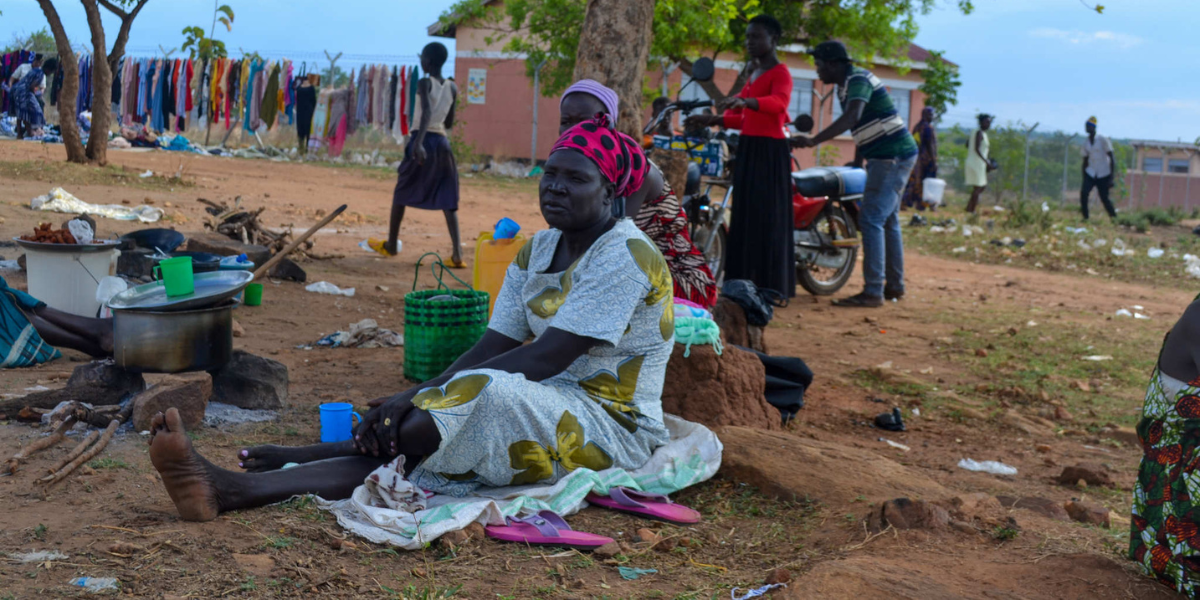
Picture two villages. Both are struggling. Both receive help.
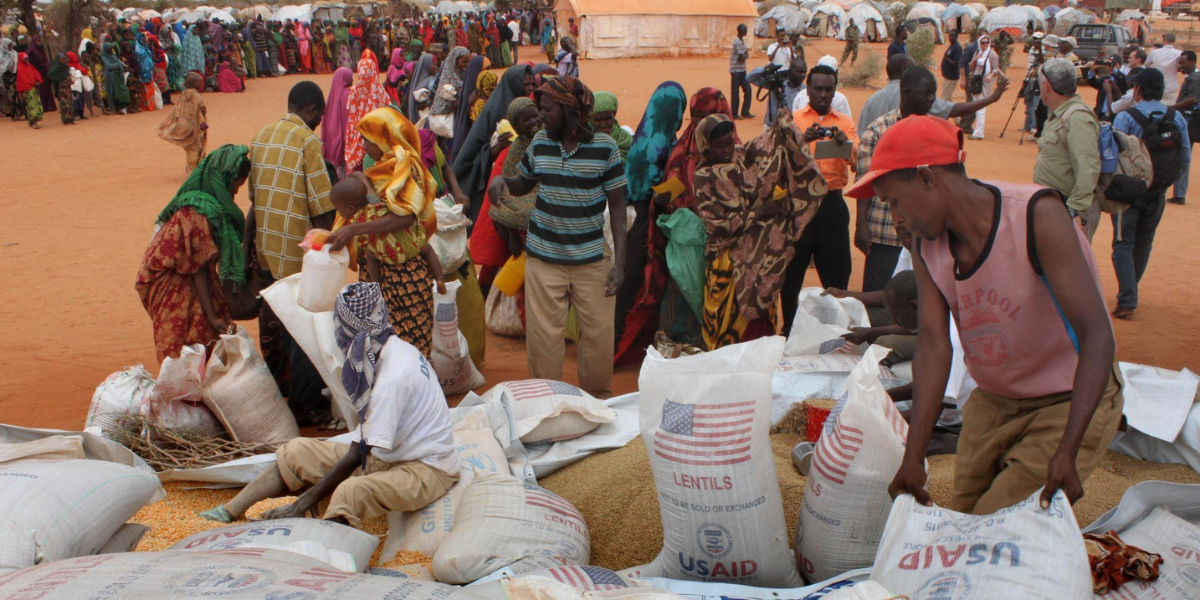
The first village receives a shipment — food, clothing, medical supplies — from an organisation headquartered far away. The shipment arrives. It is distributed. People eat, people are treated, people are clothed. And then the trucks leave, and the village is exactly as it was before, except the stockpile is gone and the problem is still sitting there, patient and permanent, waiting.
The second village receives something different. Not a shipment, but a partnership. A team arrives — not to bring answers, but to ask questions. What do you grow? What do you know? What have you been trying to do that no one has helped you finish? They stay. They train. They build alongside. And when they eventually leave — and leaving is always the goal — they leave behind a village that can now do something it could not do before. Not because resources were dropped into it. Because capacity was built within it.
This is the difference between short-term aid and community empowerment. And it is not a small difference. It is the difference between a meal and a kitchen. Between a cure and an immune system. Between relief and transformation.
At Assertive Care Organization, working every day in the rural communities around Buea in Southwest Cameroon, this distinction shapes everything we do — how we design programmes, how we show up, how we measure success, and how we think about what we are ultimately here to build.
This is why we believe, with every fibre of our experience, that community empowerment works better. And this is the honest, evidence-grounded, human story of why.
The Honest Problem With Short-Term Aid
Let us begin with something that needs to be said carefully, because it is true and important and often misunderstood.
Short-term aid is not evil. It is not always wrong. In the immediate aftermath of a disaster — a flood, a conflict displacement, a disease outbreak — emergency relief saves lives. It is necessary, it is moral, and it would be reckless to argue otherwise. There are moments when a person needs food today, and no conversation about long-term capacity building is more urgent than that.
But there is a category of short-term aid that is applied not to emergencies but to structural poverty — chronic, multigenerational deprivation that has nothing to do with a sudden shock and everything to do with the accumulated weight of neglect, inequality, and lack of opportunity. And when short-term aid is applied to structural poverty as though it were an emergency, something quietly destructive happens.
Aid that is poorly designed or implemented can indeed perpetuate cycles of dependency, fostering a reliance on external assistance rather than empowering local communities. The village learns to wait. It learns to receive. It learns that the solution to its problems arrives on a truck from somewhere else, and that the appropriate posture is anticipation — not initiative, not self-determination, not the development of one's own capacity to solve one's own challenges.
This is not a criticism of the people who give or the people who receive. It is a structural observation about what happens when the design of an intervention mismatches the nature of the problem it is trying to solve.
Traditional models of development and democracy-promotion, largely designed and driven by international donors and external actors, have often failed to deliver sustainable and meaningful outcomes. Overly technocratic, externally imposed approaches tend to overlook local realities, sidelining the voices, knowledge, and agency of the communities most affected. As a result, reforms remain fragile, trust and legitimacy erode, and cycles of dependency and disillusionment persist.
In Southwest Cameroon, where communities have been living through the accumulated weight of the Anglophone crisis, food insecurity, and generational poverty all at once, this design mismatch has very real consequences. Interventions that treat rural communities as passive recipients of external generosity do not just fail to solve the problem — they can actively make it harder to solve, by teaching a community to see itself as insufficient rather than as the source of its own transformation.
What Community Empowerment Actually Is
The phrase "community empowerment" is used so often in development circles that it has started to lose its meaning. So let us be specific about what it means to us at ACO, and what it looks like in practice in the villages we serve.
Community-led development involves a level of inclusive decision making that is often left out of traditional aid. Rather than an organisation and a few select leaders deciding what is best for a community, all community members decide what kind of projects they want to take on. The community gains deeper insight into the problem they are trying to address and what actions they can personally take to address it. The voices of women and youth matter and can exist alongside traditional leaders in the village.
For us, that principle is not an abstract value statement. It is a concrete operational commitment that shapes every programme we run.
It means that before ACO designs a literacy programme for women in a village, we spend time in that village — listening to women talk about what they need, what barriers they face, what time of day they could actually attend, what language they feel comfortable learning in, what their husbands and family members would need to understand before they could participate. The programme that emerges from that process looks completely different from a programme designed at a desk in a city, and it works in ways that the desk-designed programme never could — because it was built from the inside out, not the outside in.
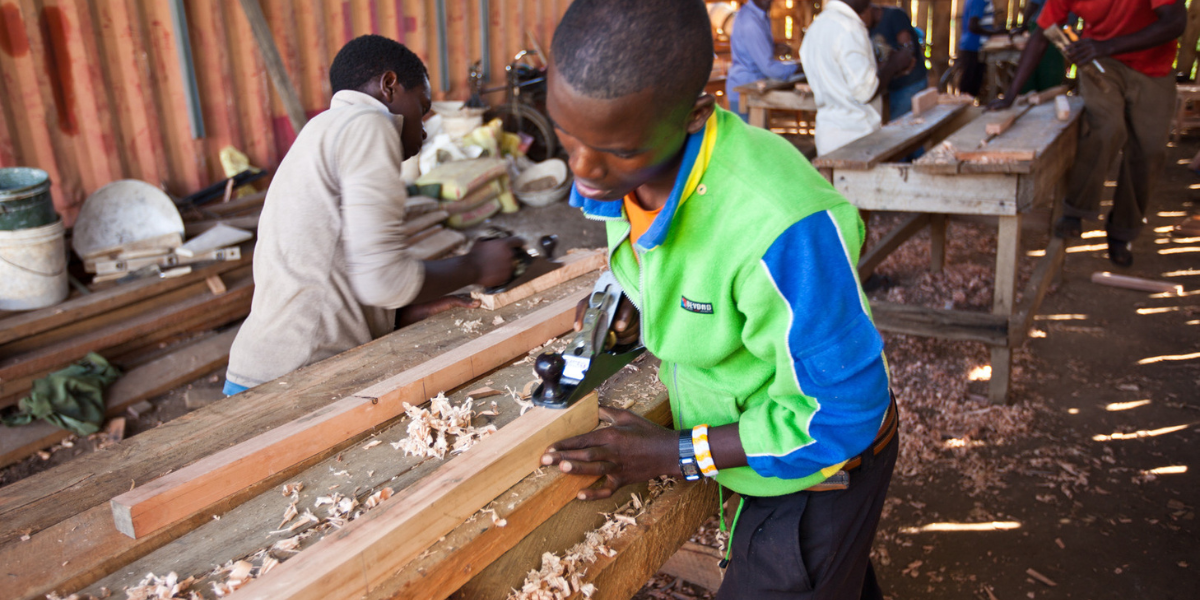
It means that when we run vocational training in carpentry or tailoring, the master craftspeople teaching those courses are not imported from elsewhere. They are from the Southwest. They understand the local economy. They know what materials are locally available, what clients will pay for, what tools can realistically be maintained in a village setting. The knowledge being transferred is not foreign. It is local expertise being formalized, valued, and passed to the next generation.
It means that when we establish a community feeding programme or a kitchen garden initiative, we do not decide what the community should grow or eat. We work with families to build on what they already know, already grow, and already value — supplementing and strengthening, not overwriting and replacing.
The greatest impacts from community-led initiatives include these key ingredients: a shared positive vision; harnessing the community's existing assets through an assets-based approach; effective use of outside resources; and ownership and agency, where skilled leaders take intentional steps to redistribute power, knowing when to step up and when to withdraw so that the community understands how to lead itself.
That last point — knowing when to withdraw — is perhaps the most important. The goal of ACO's presence in any community is to make our presence unnecessary. We are not building monuments to ourselves. We are building capacity that outlasts us.
The Evidence That Cannot Be Argued With
We are an emotional organisation. We care deeply about the people we serve, and we are not shy about that. But we are also a rigorous one. And the evidence for why community empowerment produces better long-term outcomes than short-term aid is powerful, global, and growing.
The approach of partnering with communities and local units of government, including putting resources under the direct control of community groups, has led to the efficient and inclusive delivery of basic services, and, when sustained over time, measurable reductions in poverty, particularly among the poorest populations and communities. The World Bank currently supports over 340 active community-led development projects across 95 countries precisely because this model, when done well and sustained over time, delivers outcomes that top-down aid delivery consistently fails to achieve.
When properly designed and implemented, community-driven approaches can have a substantial impact on maternal and neonatal health, and child health and nutrition. In Uganda, for example, research finds that combining community accountability interventions with objective information leads to sustained improvements in health services delivery and outcomes. These are not theoretical gains. They are children who are alive. Mothers who survived deliveries that might otherwise have claimed them.
The success of community development programmes is heavily dependent on their ability to include and empower marginalised groups, particularly women and young people. These two groups form a significant portion of Africa's agricultural workforce — with women accounting for nearly 50% of the agricultural labour force in Sub-Saharan Africa — yet they often face significant barriers in accessing resources, obtaining land ownership, and participating in decision-making processes. Programmes that address these barriers — as ACO's Adult Education and Women's Empowerment initiative does, directly and deliberately — produce outcomes that ripple across generations.
And then there is the evidence from the Congo — a case study that deserves to be told in full, because it illustrates exactly the difference we are talking about.
The Asili Story: What Happens When You Build to Last
In the Democratic Republic of Congo — a country ravaged by decades of conflict and with some of the most extreme poverty on earth — an organisation called Asili tried something radical. Rather than designing an aid programme, they designed a community enterprise.
Conceived through deep consultation with Congolese communities, Asili reimagined aid as catalytic capital for essential services — healthcare, clean water, and agricultural cooperatives. From the outset, the goal was not dependency but transfer: enterprises built for and by Congolese, sustained through local leadership. Today, Asili operates as an independent Congolese enterprise. Its water systems serve nearly 400,000 people across ninety-eight miles of pipeline, and its clinics have grown into comprehensive health centres, even piloting new diagnostic services. Its agricultural arm introduced disease-resistant potato seeds, raising productivity and income for rural farmers. Crucially, Asili survived the 2024 displacement crisis, when international NGOs evacuated; because it was rooted locally, its staff adapted operations and continued serving hundreds of thousands of people at the height of instability.
Read that last sentence again.
When the international NGOs left — because it became too dangerous, too complicated, too uncertain — Asili stayed. Because it was not an external programme operating in a community. It was a community operating itself. The crisis that caused foreign organisations to pack up and go was the same crisis that demonstrated why local ownership, local leadership, and local capacity is not just morally preferable — it is functionally superior. It is the only model that can survive what communities actually have to survive.
In Southwest Cameroon, where the Anglophone crisis has created exactly the conditions of instability and insecurity that cause external organisations to reduce operations, this lesson is not abstract. It is existential. The communities around Buea cannot afford to build their futures on programmes that disappear when things get hard. They need capacity that is theirs — permanently, unconditionally, regardless of what the political weather is doing.
That is what ACO is building.
Why This Matters Especially for Women and Youth
There is one dimension of community empowerment that carries particular weight in the context of Southwest Cameroon, and it is the one closest to ACO's core mission: what this approach means specifically for women and young people.
Short-term aid, delivered from outside, tends to reproduce existing power structures. Resources flow through whoever is most visible, most connected, most recognised by the external actors — and in most traditional communities, that means men, and it means elders. Women and youth are often the last to receive, and the first to lose access when resources are limited.
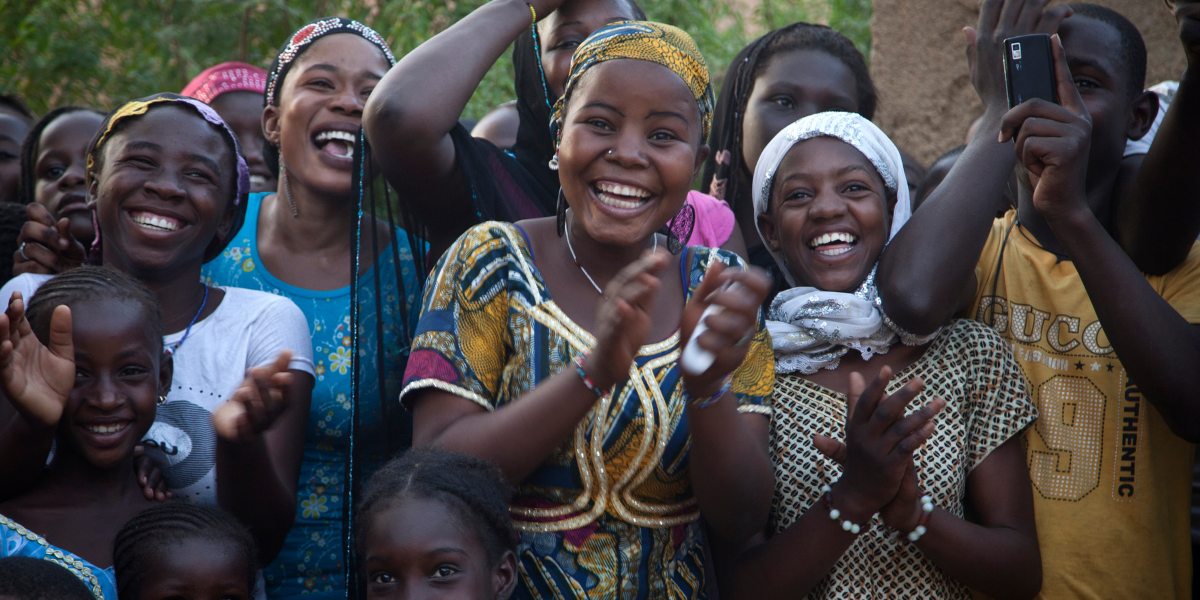
Community empowerment, done with genuine intention, deliberately disrupts this pattern. It is crucial for communities to take full ownership of their plight to unlock their potential and overcome systemic barriers. The self-help developmental projects provide a unique window of opportunity to empower and steer underprivileged communities towards self-sustainability and accountability. And when the design of those projects specifically ensures that women's voices shape the priorities, that youth are in the room when decisions are made, that the skills and resources generated go to those who have historically been excluded — the transformation is not just economic. It is social. It is a community reorganising how it sees itself and who it believes deserves opportunity.
At ACO, our Adult Education and Women's Empowerment programme does exactly this. It does not deliver education to women. It works with women to build an educational experience that fits their lives — their hours, their language, their fears, their hopes. And it does not stop at literacy. It connects knowledge to rights, rights to confidence, confidence to voice, and voice to change.
Our Vocational Training programme does something similar for at-risk youth. It does not give young people a job. It gives them a skill, a business framework, a network, and a starter kit — and then trusts them to build something that belongs entirely to them. Quick-fix, short-term programmes are not aligned with the principles of sustainable community development, and will most likely fail to bring sustainable change. Power imbalances, lack of shared visions, and ego-driven leadership were all identified as barriers to the effectiveness of community-led initiatives. We work against every one of those barriers — not by talking about them, but by building programmes where power is genuinely shared, visions are genuinely local, and the person the programme serves is the person leading it.
We Will Be Honest: Empowerment Is Harder Than Aid
We owe you this acknowledgement, because we believe in telling the complete truth.
Community empowerment is harder than shipping a truck of supplies. It takes longer. It requires deeper relationships, more patience, more willingness to listen and adapt and be wrong and try again. It cannot be accomplished in a three-month funding cycle, or measured in a single report. Community-led development is a long-term approach that is most effective when given time — often ten to fifteen years — and space for course corrections.
This is uncomfortable in a world that moves fast and rewards quick wins. Donors often want to see impact within a year. Press releases want a single, clean metric. But the kind of change that actually lasts — the kind where a community has genuinely shifted how it operates, how it sees itself, who has power and who uses it wisely — does not arrive on a timeline that can be compressed by urgency or money.
Community-led development has little to do with money. Rather, it is a matter of hope and of participatory processes toward collective goals and toward increased community leadership capacity over time. Focusing on money to ensure development, without ensuring capacity-building, guidance and advice, is insufficient to deliver the expected outcomes.
At ACO, we are honest with our supporters about this. We will not promise you a transformation in six months. We will promise you that the transformation we are building — slower, harder, less photogenic than a supply drop — will still be there in twenty years. Not because we are still running it. Because the community owns it completely, and a community that owns its own future is not waiting for anyone's permission to keep building it.
What This Looks Like in Buea, Right Now
On a weekday evening, in a community centre in one of the villages outside Buea, a group of women is sitting in a circle. The light is warm. Some of them have been working in the fields since before sunrise. Some have babies tied to their backs with cloth. Some have walked thirty minutes to be here.
They are learning to read. Not because ACO decided that literacy was what this village needed from a report written in another country. But because these women — in their own voices, in their own words, in conversations that happened before a single programme was designed — said: we want this. This is the door we have been trying to open. Help us open it.
The facilitator sitting with them is from this community. She was not brought in. She was identified, trained, and supported to lead — because sustainable education requires teachers who will still be here when the funding cycle ends, and the most powerful teacher is the one who has walked the same road as the student.

Elsewhere in the Southwest, a twenty-four-year-old named Carine has completed ACO's tailoring programme. She started her own business three months ago. Two weeks ago, she hired her first employee — a younger woman from her village who had nowhere to go and no plan for the future, exactly the way Carine herself had felt eighteen months ago.
Nobody shipped Carine a sewing machine as an act of charity. An organisation partnered with her community, asked what was needed, built a programme around the answer, trained her in both the craft and the business of it, gave her the tools to start, and trusted her to take it from there.
That is the whole model. That is the complete philosophy. Trust, and the structures that make trust productive.
An Invitation to Invest in What Lasts
If you are drawn to this work — if something in these pages has resonated with what you believe about human dignity, community agency, and the kind of change that actually changes things — then we want to make a particular invitation.
Not to fund a moment. To invest in a decade.
The most transformative contributions to ACO's work are not the ones that arrive once in a crisis and disappear when the crisis fades. They are the ones that choose to stay — regular, consistent, long-term support that gives our programmes the time and stability they need to do what they are actually capable of doing.
Research has shown that partnerships between local communities, government agencies, NGOs, and community-based organisations can facilitate the exchange of knowledge and resources, promote shared responsibility and accountability, and increase the likelihood of achieving targeted outcomes. You are one side of that partnership. ACO and the communities of Southwest Cameroon are the other. The bridge between you is built on exactly what we have been talking about — not a transaction, but a relationship. Not an emergency response, but a long-term commitment to people who are building something that will outlast all of us.
The woman in the evening literacy circle is not waiting to be saved.
She is waiting for the resources and the support that allow her to save herself — to own her land, read her lease, understand her rights, teach her daughter, and stand in her community as the full, capable, extraordinary human being she has always been.
She has always been capable of this. She has always deserved this.
We exist to remove what was standing in the way.
Will you stand with us?
Discover more about ACO's approach and community programmes in Buea and across Southwest Cameroon. Read our transparency reports, explore our impact stories, or reach out to our team directly. We believe the best partnerships begin with honest conversation — and we are always ready to have one.

Leave a comment
Your email address will not be published. Required fields are marked *
