
What does it truly mean to build a community?
It is a question that development experts, policymakers, and philanthropists have wrestled with for generations. And yet, the most honest answers rarely come from conference rooms or policy papers. They come from places like Buea — from a widow who learned to read at forty-two, from a teenager who traded the streets for a carpentry workshop, from a mother in a remote village who held her healthy newborn after receiving her very first prenatal care.
At Assertive Care Organization, we believe community-building is not a project with a start date and an end date. It is a way of being. It is the daily, unglamorous, deeply human work of showing up — with consistency, with compassion, and with creativity. It is what happens when faith meets action, when neighbors become partners, and when bold ideas take root in real soil.
This is the story of how we do it.
Faith: The Foundation Before the First Brick
Before any classroom opened, before any workshop was built, before any health worker set out into the hills of Southwest Cameroon, there was faith.
Not faith as a feeling. Faith as a conviction — a refusal to accept that the circumstances people are born into must define the ceilings they live under. Faith that a woman who never completed school still carries the full capacity to learn, to lead, and to thrive. Faith that a young man written off by his community has skills worth developing and a future worth investing in. Faith that hunger is not inevitable, that illness does not have to go untreated, and that no village is too remote to deserve care.
This faith is what drove ACO's founders to plant roots in Buea and build something that was never just about services — it was about dignity. Every program we run, every partnership we form, every beneficiary we walk alongside is shaped by this core belief: that every person carries an inherent worth that no poverty, no conflict, and no marginalization can erase.
Faith also means accountability. It means we cannot look the other way when a community needs us. It means we must show up even when resources are scarce, when the roads are difficult, and when the work is slow. It means we celebrate the small wins — a woman who signs her name for the first time, a youth who completes their first week of training, a child who receives a vaccine — with the same seriousness that we pursue the large ones.
At ACO, faith is not a decoration on our mission statement. It is the engine underneath everything we do.
Collaboration: Because No One Transforms a Community Alone
The most dangerous myth in development work is the myth of the single savior — the idea that one organization, one donor, or one program can swoop into a community and fix what is broken. We have never believed that at ACO, because we have seen what the alternative looks like.
Real transformation is communal. It is messy, slow, and beautiful. It requires many voices at the table — especially the voices of those who have been sitting on the floor, outside the room, for too long.
Our model of collaboration begins with listening. Before ACO designs a program, we sit with community members — women, youth, elders, traditional rulers, local health workers — and we ask questions more than we offer answers. What do you need? What has been tried before and failed, and why? What resources already exist within this community that outsiders have overlooked? What does success look like to you, not just to us?
This approach shapes everything. Our adult education curriculum was co-designed with the women who would attend it, ensuring it fits around the rhythms of their daily lives — their farming schedules, their caregiving responsibilities, their fears about walking into a classroom as adults. Our vocational training trades were selected based on what local markets actually need, informed by business owners, local government, and young people themselves. Our health outreach routes are mapped with the help of community health workers who know which households are hardest to reach and why.
Collaboration also means recognizing that ACO is one actor in a larger ecosystem. We work alongside local government health departments, faith institutions, women's associations, youth councils, and international development partners — not to multiply bureaucracy, but to multiply impact. When a program is co-owned by a community's own leaders, it outlasts any single funding cycle. It becomes part of the community's identity, and the community protects it.
This is the kind of sustainability that matters most to us.
Innovation: Practical Creativity in the Face of Real Constraints
In Southwest Cameroon, we do not have the luxury of waiting for perfect conditions. Resources are limited. Infrastructure is uneven. The challenges facing our communities are layered and stubborn. And so we have learned — out of necessity as much as intentionality — to innovate.
But innovation at ACO does not mean importing solutions designed elsewhere and hoping they fit. It means looking honestly at a problem, listening carefully to those living inside it, and designing responses that are practical, dignified, and rooted in local reality.
Take youth unemployment. The scale of the crisis demanded more than generic skills training. ACO built a vocational program structured around trades with real, demonstrated demand in Buea's local economy — carpentry, tailoring, and entrepreneurship. We layered in business mentorship, guidance on micro-financing, and peer support networks, because we know that a skill without a pathway is just a lesson. The goal was never simply to train young people. It was to launch them.
Take food insecurity. Our Zero Hunger Initiative does not stop at distributing meals, because meals alone do not end hunger — they postpone it. So we combine food support with nutrition education, community kitchen garden development, and advocacy for sustainable food systems. We work to address the roots, not just the symptoms.
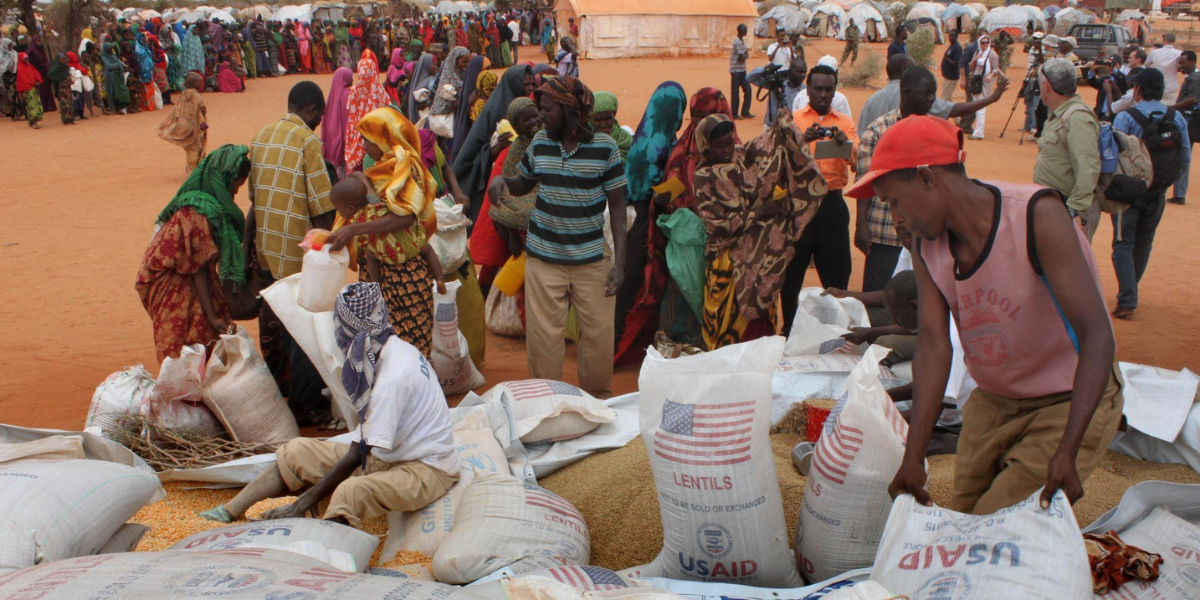
Take healthcare access. In villages where the nearest clinic is hours away, ACO's mobile health outreach teams travel to the people, rather than waiting for people to come to them. Our community health workers are trained not only in clinical skills but in cultural competence and trust-building, because in communities that have been underserved for years, care that does not feel safe is care that will not be used.
In each case, the innovation is not about being clever. It is about being honest — honest about what is not working, humble enough to listen to better ideas, and committed enough to try something different for the sake of the people we serve.
Four Initiatives. One Mission. Countless Lives.
These values — faith, collaboration, innovation — are not philosophies we hold in theory. They are the lived architecture of four programs that together form the heartbeat of ACO's work.
Adult Education and Women's Empowerment exists because education is not a privilege for the young alone. In our literacy and numeracy classrooms, women who were denied schooling by poverty, culture, or circumstance come to discover that it is never too late to learn — and that learning is only the beginning. Graduates walk away not only able to read and write, but equipped with financial literacy, leadership skills, and the confidence to take up space in their families, their communities, and their economies.
Vocational Training for At-Risk Youth exists because talent without opportunity becomes frustration, and frustration without direction becomes danger. Our workshops give young men and women something more powerful than a certificate — they give them a future they can build with their own hands. Graduates enter the workforce or launch their own enterprises, and many go on to employ others in their communities.
The Zero Hunger Initiative exists because we refuse to accept hunger as a normal feature of life in our communities. Through food distribution, nutrition education, community gardens, and systemic advocacy, we work toward a Southwest Cameroon where every family has enough to eat — not because of outside dependency, but because of community resilience built from the inside.
Health Outreach exists because geography should not determine whether a child is vaccinated, whether a pregnant mother receives care, or whether a preventable illness goes untreated. Our teams go where they are needed, bringing essential medical services and health education to communities that formal health systems have not yet reached.
Together, these four programs reflect a simple but radical idea: that the most vulnerable people in our communities deserve not just charity, but investment. Not just survival, but flourishing.
The Numbers and the Names Behind Them
We measure our work because accountability matters — to our donors, to our partners, and above all to the communities we serve. Hundreds of women have graduated from our adult education programs. Hundreds of youth have completed vocational training and entered sustainable livelihoods. Thousands of patients have received medical care through our outreach campaigns. Thousands of meals have reached families who would otherwise have gone without.
But every number has a name. Every statistic has a face.
There is the forty-two-year-old widow who enrolled in our literacy program certain she was too old to learn, and who now reads bedtime stories to her grandchildren for the first time. There is the teenager who was weeks away from making a decision he could not undo, until ACO's vocational workshop gave him a reason to stay — who now runs a small furniture business and employs two of his former classmates. There is the woman in a remote hillside village who had never once seen a doctor during any of her four pregnancies, until our health outreach team arrived at her door, and whose youngest child was born healthy.
These are the stories that remind us why the work matters. And they are the stories that hold us to account when we are tempted to be satisfied with good enough.
What Comes Next
ACO is not an organization that rests on what it has already accomplished. The communities we serve are changing, their needs are evolving, and we are committed to evolving with them.
We are exploring the integration of digital literacy into our adult education programming, because economic opportunity today increasingly requires comfort with technology. We are assessing new vocational trades — including solar energy and agricultural processing — that reflect where livelihoods are headed in our region. We are developing community seed bank initiatives to deepen food sovereignty. And we are beginning conversations about mental health support in a region still carrying the deep psychosocial wounds of years of instability and conflict.
In everything, we remain committed to the discipline of listening before designing, measuring not just what we do but the difference it makes, and ensuring that the communities we serve remain the authors of their own futures — not the subjects of someone else's story.
A Community Is Not Built Overnight
It is built in small, faithful acts repeated over time. It is built in classrooms and workshops and clinics and kitchen gardens and conversations around fire and tables. It is built in the hands of women who refused to stop learning and young people who refused to give up and health workers who refused to leave anyone behind.
In Buea, and across the communities of Southwest Cameroon, that building is underway. It has been underway for some time now. And it will continue — because the people at the heart of this work are not waiting for the world to change around them. They are doing the changing, together, every single day.
That is what Assertive Care Organization exists to support. Not to lead the story, but to make sure it keeps getting written.
One person. One family. One community at a time.

Leave a comment
Your email address will not be published. Required fields are marked *