
There is a carpenter in a village outside Buea who did not exist two years ago.
Not the man himself — he has always existed. He was born here. He went to school here, as far as he could go. He grew up watching his parents farm the same narrow strip of land that their parents had farmed, and their parents before them. He is twenty-six years old, restless, and brilliant in ways that the formal economy has never had the vocabulary to recognise.
What did not exist two years ago was the carpenter. The person who can read a plan, cut a joint, build a table that does not wobble, a door that closes flush, a roof that holds against the October rains. The person who earns money on Wednesday, spends it at the market on Friday, hires a younger person the following month, and becomes — slowly, quietly, irreversibly — a small engine of economic activity where there was none before.
His name is Emmanuel. He is one of dozens of graduates of ACO's Vocational Training Programme. And his story is not a feel-good exception. It is, when you understand the economics behind it, a precise and replicable model for what it means to build a community that can sustain itself.
This post is about that model — what it is, how it works, and why a skilled trade in the hands of an at-risk young person in Southwest Cameroon is one of the most powerful economic interventions available to anyone who wants to change this region's future.
The Crisis That Made This Work Urgent
Youth unemployment in Cameroon is not just a statistic. It is a structural emergency wearing the face of a generation.
Youth unemployment (ages 15–34) is particularly concerning: 39% are employed, but many are underemployed or in the informal sector. Nearly 90% of the workforce is in the informal sector — 45% in informal agriculture and 39% outside agriculture. The formal economy, which employs roughly 16% of all workers, simply does not have the capacity to absorb the hundreds of thousands of young people entering the labour market each year.
With youth unemployment estimated at 40% of the active population, it is clear that traditional education pathways are not providing the necessary skills to secure employment. The university degree that a young person's parents sacrificed to fund too often opens no door. The diploma is real. The opportunity it was supposed to unlock is not.
The principal reason for unemployment is an educational curriculum that does not match the needs of the labour market, lack of professional training, and high taxes that discourage businesses. Young people are not failing because they are not trying. They are failing because the system handed them the wrong tools for the economy that actually exists.
In the Southwest Region, this crisis is compounded by nearly a decade of conflict. As a result of the insecurities, young Cameroonians are exposed to high protection risks related to delinquency and radicalisation. Adolescents resort to negative coping mechanisms because of poverty and limited civic engagement in the country. Displacement has exacerbated the already weak infrastructure of youth centres that do not meet the demands for quality vocational education.
A young person in rural Buea who has no skill, no income, no pathway, and no hope is not simply poor. They are a person in whom the potential for something catastrophic — migration, radicalisation, or simply the lifelong burial of an extraordinary human being under the weight of structural neglect — is quietly accumulating.
ACO's Vocational Training Programme is designed to interrupt that accumulation. Precisely. Practically. Permanently.
Why Trades? Why These Three?
When ACO chose to invest in carpentry, tailoring, and entrepreneurship as the backbone of its skills programme, the choice was not arbitrary. It was the result of listening — to communities, to the local economy, and to the specific realities of the Southwest Region's labour market and resource environment.
Carpentry: Building the Infrastructure a Growing Region Needs
The Southwest Region of Cameroon is a region in motion. Despite the ongoing crisis, Buea continues to grow — as a university city, as a commercial hub, as a place where displaced people from rural areas are settling and trying to rebuild. Growth means construction. Construction means wood. And wood, worked by skilled hands, is one of the most consistent sources of tradeable value in the regional economy.
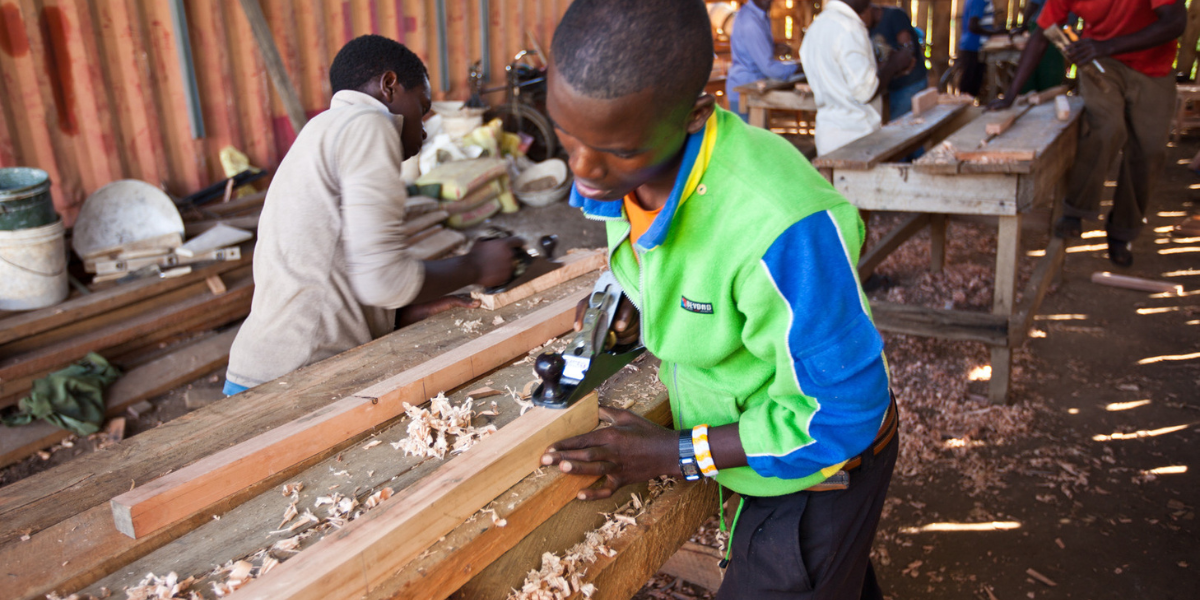
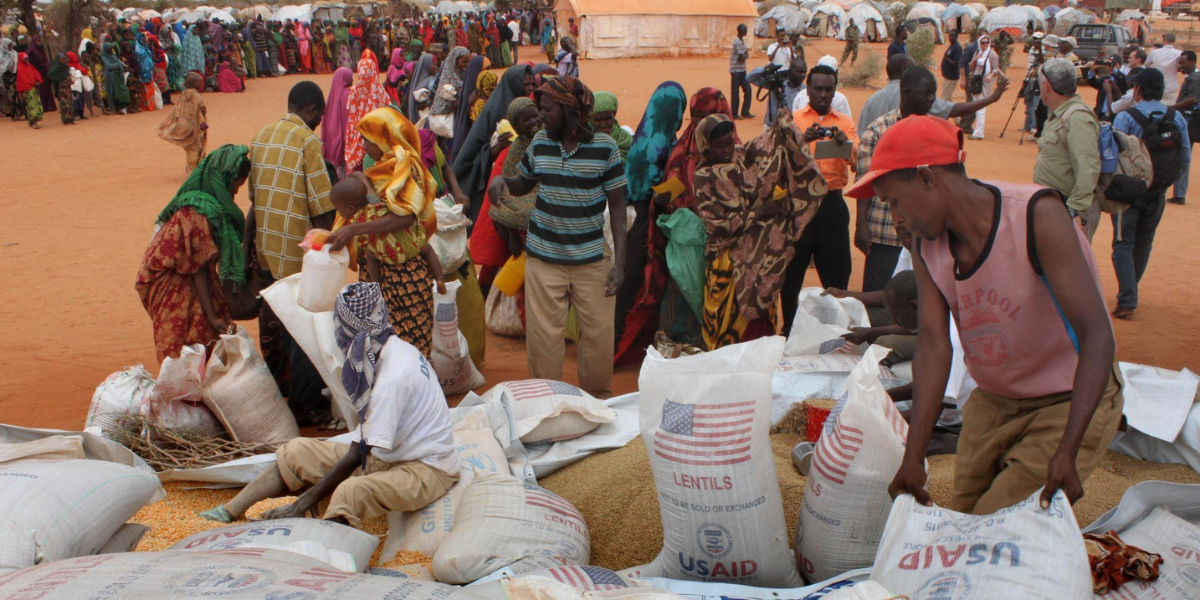
Graduates in carpentry are rebuilding their communities day by day. Each skilled artisan answers the bigger question of why investing in vocational training in Africa matters. A trained carpenter in rural Southwest Cameroon can build furniture, install doors and window frames, construct storage units for agricultural produce, repair damaged structures, and take on contracts from homeowners, businesses, schools, and local government. The demand is not theoretical. It is present, growing, and chronically undersupplied.
There is something else about carpentry that matters deeply to ACO. It is a trade that transforms raw local materials — timber, bamboo, raffia — into things of lasting value. It is manufacturing, at the smallest and most accessible scale, happening inside the community. Money paid for a locally made table stays in the community. It does not travel to a furniture importer in Douala or a factory in another country. It circulates — from the customer to the carpenter, from the carpenter to the market, from the market back into the community's economic bloodstream.
This is the local multiplier effect, and it is the fundamental reason that skilled tradespeople are not just workers. They are community economic infrastructure.
Tailoring: Meeting Demand That Has Always Been There
In every village, in every market, in every celebration in the Southwest Region of Cameroon, there is cloth. There are robes and wrappers, school uniforms and Sunday dresses, work clothes and wedding attire. The demand for quality, affordable garment work — alterations, new pieces, repairs, ceremonial clothing — is constant, culturally embedded, and growing as household incomes slowly rise.
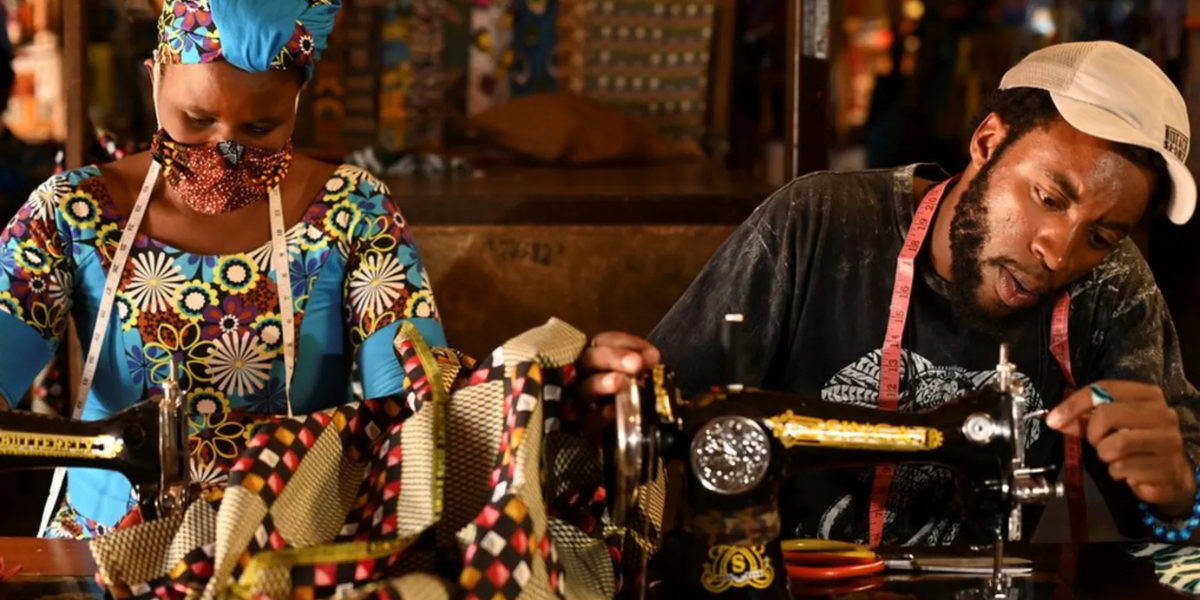
Yet skilled tailors in rural areas remain scarce. Families either travel to urban centres for quality work — spending money on transport that could stay in the local economy — or settle for lower-quality alternatives that do not last.
A trained tailor in a rural community outside Buea does not need to migrate to find clients. The clients are already there, already spending on clothing, already preferring local. What they need is someone with the skill to serve them well. Women in particular face entrenched gender discrimination limiting their access to opportunities and perpetuating their economic dependence. Vocational training programmes, when properly designed, provide individuals with practical skills tailored to specific occupations and industries — and tailoring, in the Southwest, is an occupation with immediate market demand, low start-up costs, and particular resonance for women who need a livelihood that can be built around the structure of their existing household responsibilities.
The sewing machine does not require a factory. It does not require a commute. It does not require a government job or a multinational's approval. It requires skill, a supply of fabric, and customers — all of which exist in abundance in the communities ACO serves.
Entrepreneurship: The Architecture That Makes Trades Into Livelihoods
ACO does not teach carpentry and tailoring in isolation from business knowledge. We have seen — in other programmes, in the development literature, in conversations with graduates who struggled — what happens when a person has a skill but no framework for building a livelihood around it.
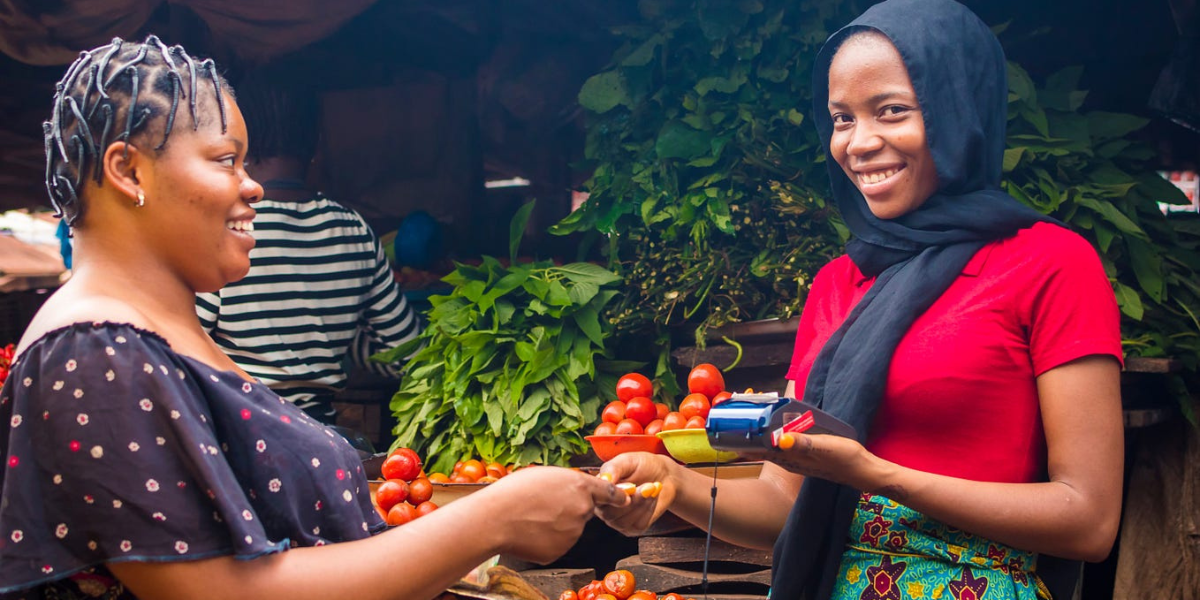
They undercharge. They cannot manage cash flow. They fail to reinvest. They are cheated by suppliers they did not know how to negotiate with. They grow discouraged when the first month is slow, not knowing that slow first months are normal and survivable. They have a skill. They do not have a business.
This kind of support does not just help individuals — it enables them to grow enterprises that employ others. The goal is to strengthen the entrepreneurial capacity of young business owners and inspire a new generation of youth entrepreneurs across Cameroon.
ACO's entrepreneurship curriculum — woven through both the carpentry and tailoring programmes as a non-negotiable thread — covers business planning and break-even analysis, pricing and costing, record-keeping and basic accounts, supplier negotiation, client acquisition and retention, savings and reinvestment strategy, and access to microfinance and cooperative credit.
This is not a standalone module squeezed into the last week of training. It is embedded throughout the six-month programme, taught in parallel with the trade, so that every lesson in cutting a joint or setting a seam is accompanied by the corresponding lesson in what that joint or seam is worth, how to price it, and how to build a business around making it repeatedly, reliably, and well.
The ACO Skills Programme: What Happens Inside Six Months
Let us take you through exactly what a vocational training cohort looks like at ACO — because transparency, for us, extends to our programmes as much as to our finances.
Selection: Who We Train and Why
ACO's vocational training is specifically designed for at-risk youth — young men and women between the ages of 16 and 35 who have dropped out of secondary school, been displaced by the conflict, aged out of the education system without employment prospects, or are living in households below the poverty line with no viable economic pathway in sight.
We do not select the easiest cases. We deliberately seek out the young people that conventional programmes overlook: those with disrupted educational histories, those caring for dependants, those from the most remote villages, those who have been told — by circumstances, by family pressure, by a system that ran out of space for them — that they are not worth investing in.
They are. That conviction is the foundation of the programme.
The Training: Six Months That Belong to the Graduate
Each cohort runs for six months, meeting five days a week in a training space that ACO establishes in or near the community being served. The location matters. We do not ask people to travel long distances to access training. We bring the training to where they are — reducing the barrier of transport costs, allowing participants who are also caregivers to remain near home, and embedding the learning in the actual community where the resulting business will eventually operate.
Master craftspeople as instructors: ACO's carpentry and tailoring trainers are not imported from outside the region. They are experienced artisans from Southwest Cameroon — people who have built thriving businesses in trades, who understand the local market, know the locally available materials, speak the languages of the community, and carry the kind of practical authority that comes from decades of doing rather than years of teaching theory. They teach what works here — not what works in a textbook written elsewhere.
Hands-on from day one: There is no six-week theory phase before participants touch tools or fabric. On the first week, hands meet materials. On the first month, each participant has produced something real — a basic joint, a stitched seam, a simple piece of furniture or a garment that can be shown, worn, and sold. Learning by doing is not a pedagogy choice for ACO. It is the recognition that the most powerful form of confidence is the one that comes from holding something you built with your own hands and knowing that someone would pay for it.
Progressive complexity: Over six months, skills build from foundational to sophisticated. A carpentry trainee begins with hand tools and basic joints, progresses to furniture construction, moves into more complex structural work, and ends the programme with the ability to take and fulfil a diverse range of client commissions. A tailoring trainee begins with measurements and simple alterations, advances through pattern cutting and garment construction, and graduates with the ability to produce bespoke pieces from scratch — the level of skill that commands premium pricing in the local market.
Embedded entrepreneurship throughout: As described above, business skills are not separate. They are woven into every week of training. By month three, every participant has written a basic business plan for their own enterprise. By month five, they have conducted a dry run of pricing, client management, and cash-flow management with real or simulated commissions. By month six, they are ready to launch — not hoping to figure it out as they go, but equipped with a framework for building something that lasts.
The Starter Kit: What Graduates Receive
ACO's vocational training does not end at graduation with a certificate and a handshake. Every graduate receives a starter kit — the tools necessary to begin practising their trade immediately without the barrier of equipment costs that would otherwise delay or prevent them from working.
Carpentry graduates receive a curated set of professional hand tools: saws, chisels, planes, measuring instruments, and the consumables needed for the first months of independent work. These are not cheap substitutes. They are professional-quality tools chosen for durability, local availability of replacement parts, and the specific demands of the Southwest Cameroonian construction and furniture market.
Tailoring graduates receive a sewing machine — the single most significant capital investment in a tailoring business — along with a starter set of needles, thread, measuring tape, scissors, and cutting supplies sufficient for the first months of client work.
The starter kit is not charity. It is capitalisation — the minimum productive asset required to convert a newly acquired skill into income. Without it, a graduate with six months of excellent training returns home with knowledge but no means of production. With it, they return home ready to work on day one.
The Alumni Network: What Continues After the Programme Ends
ACO's relationship with graduates does not end at the last day of training. We maintain an active alumni network that provides ongoing peer support between graduates, mentorship from more established ACO alumni who are further along in building their businesses, referrals to microfinance and savings cooperatives for graduates ready to expand, collective buying arrangements for materials that reduce input costs for individual workshops, and connections to institutional buyers — schools, health facilities, community organisations — who need the products and services that graduates provide.
This network is the infrastructure that transforms individual skilled workers into an economic ecosystem. Jobs are central to development, as they build self-reliant economies, reduce fragility and migration pressures, and create demand for local goods and services. The network ACO builds is the connective tissue through which individual skills become community economic capacity.
How Skill-Building Fuels Local Economies: The Multiplier in Action
This is the section that takes the story from individual uplift to community transformation — and it is the argument we most want donors, partners, and policymakers to understand deeply.
When a young person earns income from a skilled trade in their own community, something economically significant happens that does not happen when the same person migrates to the city for informal work, or receives a one-time aid distribution, or remains unemployed.
The money they earn circulates.
They buy food at the local market. The market vendor earns more and can buy more stock from local farmers. The farmer earns more and can afford school fees for her children. The children attend school and develop the human capital that, a generation from now, will fuel the next layer of economic growth. The carpenter orders timber from a local supplier. The tailor buys fabric from a local trader. Each of these transactions keeps value inside the community — building, layer by layer, the economic density that distinguishes a community that is merely surviving from one that is genuinely thriving.
Each additional year of education and skills development can boost African learners' earnings by up to 11.4% — the greatest return to education in any region in the world. For the specific population ACO trains — young people who were previously entirely outside the productive economy — the return is not 11.4% on a salary. It is the difference between zero income and a living wage. Between economic dependence and economic contribution. Between a drain on household resources and a source of household investment.
Skilled workers attract investment and strengthen industries. Income-boosting trades lower poverty and stimulate markets. Employed youth are less likely to join crime or conflict. This last point is not incidental in a region that has spent nearly a decade managing the consequences of conflict. Peace is not only a political achievement. It is an economic one. A young man with a full order book and a growing reputation as a reliable carpenter is not a young man looking for another way to assert his existence in a world that has given him no legitimate pathway to matter.
Employment is, among other things, a stabilising force. And in Southwest Cameroon, stability is not an abstract value. It is the foundation on which everything else — education, health, food security, women's empowerment — must be built.
The Multiplier Made Visible: Emmanuel and What Came After
Let us come back to Emmanuel — the carpenter who opened this piece — because his story, told fully, illustrates exactly how the multiplier works in practice.
Emmanuel completed ACO's carpentry programme eighteen months ago. In the first month after graduation, he used his starter kit to fulfil a small commission from a neighbour — a set of wooden shelves for a small shop. Word spread. By the third month, he had five regular clients. By the sixth month, he had more work than he could complete alone.
He hired his first apprentice — a seventeen-year-old from his village named Bernard, who had dropped out of school and was heading toward the city with no plan. Bernard learns by working. Emmanuel earns more than he could earn alone. Bernard earns something, learns a skill, and stays in the community.
Emmanuel now buys timber from a local supplier twice a month — consistent, predictable demand that has allowed that supplier to hire a second person to manage the increased volume. He buys his meals from the woman who runs the food stall near his workshop. He is saving, through ACO's alumni cooperative savings group, toward the purchase of a second sewing machine — not for tailoring, but because his sister completed ACO's tailoring programme last year and they are discussing a combined workshop that serves the village from both trades.
His mother, who once worried daily about whether he would leave for Douala and never come back, now talks about her son with something that has no direct translation but that every parent anywhere in the world recognises: the quiet, bone-deep relief of watching a child find their place and build something real in it.
This is what self-sustaining looks like. Not the absence of need. Not perfection. But a young person, his family, his apprentice, his supplier, and his community, moving — slowly, imperfectly, unstoppably — toward a future they are generating from within themselves.
What the Evidence Tells Us — and What It Demands of Us
The global development community has been paying attention to exactly this kind of model. Young people aged 18 to 35 represent 57% of the labour force in Cameroon — but many struggle to find work. With rapid population growth and urbanisation, the need for better employment opportunities is urgent. Not everyone can grow a large business. For most youth — those with limited resources and few formal job prospects — creating their own job is often the most viable path.
Improving access to quality skills development will help Africa harness the growth potential of a fast-growing and increasingly skilled workforce. Eighty-five percent of the total expected increase in the global working-age population by 2050 will be in Africa. The continent's demographic reality is not a problem to be managed. It is a potential to be activated — but only if the skills and opportunities exist to channel that potential into productive activity.
ACO is one small but determined part of that activation. We are not waiting for a national policy to shift or a foreign investment to arrive. We are building the skills, one graduate at a time, that allow the communities of Southwest Cameroon to grow their own economy from the inside out — using local knowledge, local materials, local markets, and local leadership.
The Southwest has been designated an Economically Distressed Zone with special tax incentives for new investments — companies are granted total tax exemptions for three years during installation and corporate tax exemptions for seven years once operations begin. The policy infrastructure for economic recovery in this region is taking shape. What it needs, to become real and lasting rather than theoretical and temporary, is a generation of skilled, entrepreneurially equipped young people ready to build the businesses that will make those incentives mean something.
ACO is training that generation.
An Invitation to Invest in Skills That Last a Lifetime
A skill cannot be repossessed. It cannot be distributed and then run out. It cannot be made irrelevant by a change in political leadership or a shift in donor priorities. When a young woman in rural Southwest Cameroon learns to cut a perfect seam, that knowledge belongs to her — permanently, unconditionally, for the rest of her life.
It belongs to the business she builds. To the apprentice she will eventually train. To the children she will raise with the income it generates. To the community that will buy her work, recommend her to neighbours, and slowly, imperceptibly, build around her competence the kind of local economic density that no external intervention can manufacture, but that a skilled, motivated, community-rooted artisan can.
Supporting ACO's Vocational Training Programme is, in the clearest possible sense, an investment in infrastructure. Not the concrete-and-steel kind. The human kind — which lasts longer, generates more, and multiplies in ways that no blueprint can fully predict.
Emmanuel is one person. He has an apprentice. His sister runs a tailoring workshop across the village. Together, they are doing something that no aid shipment could have done for them.
They are building something that will still be standing long after all of us are gone.
To support ACO's Vocational Training Programme or learn more about how skills-based development is transforming lives in Buea and the Southwest Region, explore our programmes page or reach out to our team. We believe in the power of a skilled hand, a sharpened mind, and a community that has decided — irrevocably — to build its own future.

Leave a comment
Your email address will not be published. Required fields are marked *