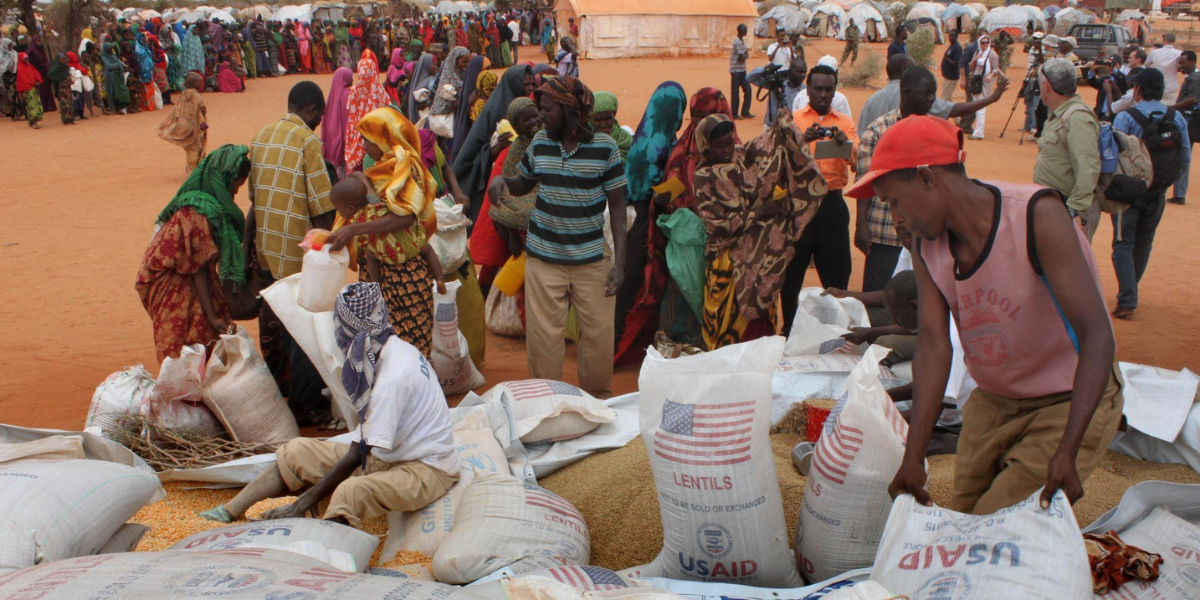
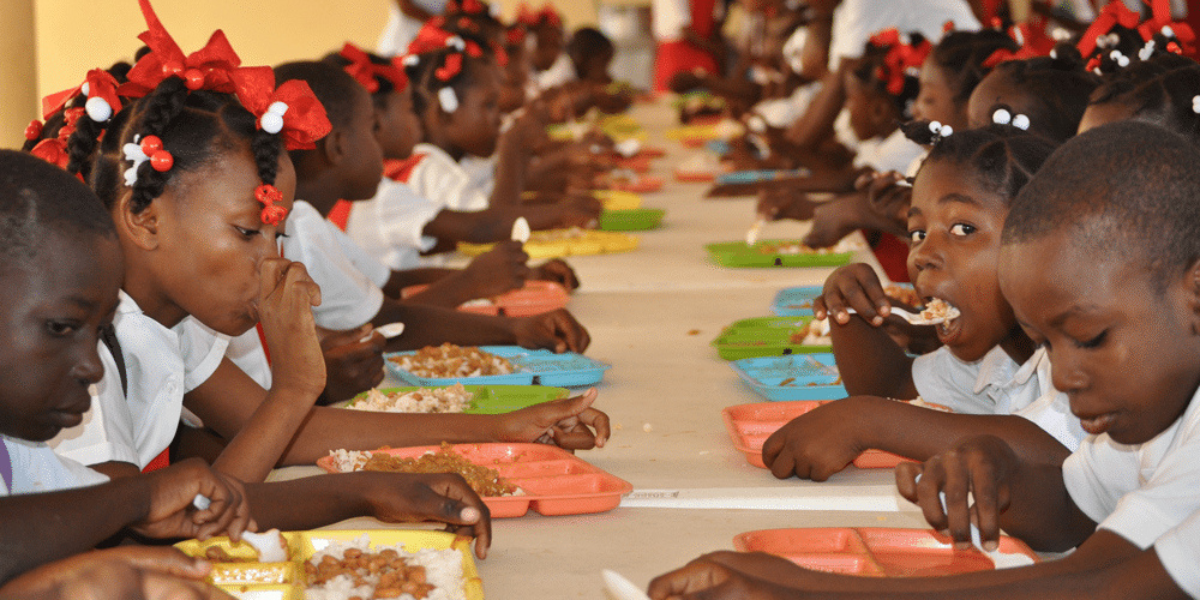
Somewhere outside Buea, right now, a mother is making a calculation.
It is not the kind of calculation that requires a pen or a spreadsheet. It is the kind that happens in the body — in the hollow space behind the ribs, in the quiet that falls over a kitchen when the pot goes on the fire with less in it than yesterday. She is calculating how to feed four children on what remains. She is deciding, without saying it aloud, which child gets a full bowl and which one gets what is left. She is doing something that no parent should ever have to do — and she is doing it again today, as she did yesterday, as she may do tomorrow.
This is not a story from a famine headline. This is Tuesday in the Southwest Region of Cameroon.
And it is the reality that ACO's Zero Hunger Initiative was built — from the ground up, programme by programme, village by village — to change.
The Scale of What We Are Up Against
Before we show you the inside of our food programmes, we need to show you the full weight of what we are working against. Because the hunger crisis in Southwest Cameroon is not a quiet, manageable problem. It is an emergency that the world is chronically underpaying attention to.
According to the Cadre Harmonisé, 3,080,145 people are currently food insecure at IPC Phase 3 or above across Cameroon between October and December 2024, with the three crisis-affected regions — the South West, North West, and Far North — hosting the majority of food insecure people.
That number is not static. It is moving in the wrong direction. As of late 2023, the prevalence of crisis-or-above food-based coping strategies in Cameroon was nearly 37%, while the prevalence of insufficient or poor food consumption stood at over 40%.
And in Buea specifically — the city we call home — the picture is stark. A community study of Buea Municipality found that nearly 99.3% of rural households experience measurable food insecurity. Not some. Not many. Nearly all.
The causes are layered and reinforcing, exactly as you might expect in a region carrying the weight of nearly a decade of conflict. Cultivated land during the 2025 main season was approximately 20 to 30 percent below pre-conflict levels in both the Northwest and Southwest regions, leading to below-average harvests. Staple food prices remain well above pre-conflict and five-year averages, with yellow maize prices in Buea rising by 10 to 20 percent in September, averaging 20 percent higher than the previous year.
Farmers who want to grow cannot always reach their fields. Families who want to buy cannot always afford what the market charges. Children who need to eat cannot always access what their bodies require to develop, learn, and thrive. WFP's response — the largest international food assistance operation in the country — assisted nearly 115,000 individuals in August 2025, which represents less than 25 percent of the total population at the divisional level.
The gap between what the humanitarian system provides and what communities actually need is not a rounding error. It is a chasm. And it is into that chasm — specifically, with clarity and intention — that ACO's Zero Hunger Initiative steps.
Why We Built Our Own Model
The traditional humanitarian food response is designed for emergencies — for the acute, the sudden, the geographically concentrated crisis that demands an immediate, large-scale distribution of calories. That model has value and, in its proper context, saves lives.
But Southwest Cameroon's hunger is not only acute. It is structural. It is chronic. It is the product of years of conflict-disrupted agriculture, market supply chain failures, rising food prices, gender inequalities in land access, and nutritional knowledge gaps — all operating simultaneously, all making each other worse.
An emergency food distribution, dropped into that context, helps for as long as the distribution lasts. What ACO is building is something different: a model that works on the hunger crisis at multiple levels simultaneously, addressing both the immediate need and the systems that generate it, and doing so through the hands of the communities themselves.
Case studies from Cameroon and across sub-Saharan Africa confirm that good practices for sustainably reducing malnutrition include homestead gardens, biofortification, and social protection programmes — and that a sound holistic approach must tackle all forms of malnutrition and capture synergies between agriculture, water, health, sanitation, and the threat of conflict.
That is the architecture of ACO's Zero Hunger model. Let us take you inside it.
The Four Pillars of ACO's Zero Hunger Initiative
One: Emergency Nutritional Support — Meeting the Immediate Need Without Looking Away
We start here because hunger is not a problem that can wait for a long-term solution to take effect. When a child is malnourished today, every day that passes without intervention is a day of irreversible developmental damage accumulating quietly in their growing body.
ACO's emergency nutritional support is our first response — and it operates with speed, precision, and deep community knowledge. We identify the most vulnerable households in the communities we serve: families with children under five, pregnant and breastfeeding women, elderly individuals living alone, households that have been displaced by conflict, and families where the primary breadwinner is sick, injured, or absent.
For these households, we provide targeted food packages — not generic, one-size-fits-all distributions, but carefully composed packages built around locally available, culturally appropriate, and nutritionally dense foods. We prioritise:
Protein sources: Beans, groundnuts, and dried fish — staples of the Southwest Cameroonian diet that provide essential amino acids for child development and maternal health.
Starchy staples: Maize, plantain, and cassava — calorie-dense, familiar, and foundational to household food security in this region.
Micronutrient-rich additions: Leafy greens, orange-fleshed sweet potato, and vitamin A-fortified products — because malnutrition in Southwest Cameroon is not only about calories. It is about dietary diversity. Households consuming monotonous, starch-heavy diets are malnourished even when they are not visibly hungry.
Supplementary nutrition for children under five and pregnant women: Therapeutic and preventive nutrition products targeting the 1,000-day window — the period from pregnancy to a child's second birthday — which research consistently identifies as the single most critical intervention window for preventing lifelong developmental harm.
Every distribution is accompanied by a home visit from our trained community nutrition volunteers — women from the community who have been trained in basic nutrition assessment, warning sign identification, and referral pathways to our health outreach programme. They are not there to deliver a package and leave. They are there to sit, to talk, to observe, and to connect.
What this costs and what it delivers: The cost of a monthly nutritional support package for one vulnerable family — enough to meaningfully supplement their diet and protect the youngest household members from the worst effects of food insecurity — is less than most people in the developed world spend on a single evening meal. The return on that investment is a child whose brain develops normally, a pregnant mother whose baby is born at a healthy weight, an elderly man who does not spend the dry season quietly starving.
Two: Community Kitchen Gardens — Growing Food Sovereignty from the Soil Up
Emergency support meets today's hunger. Kitchen gardens begin to dismantle the system that creates it.
In Cameroon, home gardens are already prevalent as climate change adaptation measures by smallholder subsistence farmers, comprising diverse resilient species for household nutrition, animal fodder, and cash income. Research highlights the importance of local know-how and management capacities to enhance the resilience of home gardens and maintain their biodiversity.
ACO's Community Kitchen Garden Programme builds on this existing tradition — deepening it, formalising it, and making it more productive, more nutritionally diverse, and more resilient to the shocks that have historically devastated family food production in the Southwest.
Here is exactly how it works:
Community identification and consent: We begin every kitchen garden initiative in a community by spending time listening. Which households want to participate? Who has access to land — however small — and who does not? What has the community already tried, and what barriers did they encounter? What crops do people actually want to grow and eat? A kitchen garden that produces vegetables the family will not consume is not a nutrition intervention. It is a gardening exercise. We build programmes that produce food people love.
Starter inputs: Every participating household receives a starter kit — a carefully selected package of high-yield, nutritionally diverse, locally adapted seeds. Our seed selection prioritises:
- Leafy vegetables rich in iron and vitamins: amaranth, sweet potato leaves, moringa, and local varieties of spinach and kale
- Legumes that fix nitrogen in the soil while providing protein: cowpeas, groundnuts, and climbing beans
- Root vegetables with long shelf life and high caloric density: cassava, yams, and sweet potato
- Fruiting vegetables for dietary diversity: tomatoes, peppers, and okra
We do not import seeds from outside the community when local varieties are available and appropriate. Local seeds are better adapted to local soils and climate, more familiar to local farmers, and do not create dependency on external seed suppliers.
Training in regenerative growing techniques: Alongside seeds, we provide training in techniques that are specifically suited to the small-plot, low-resource reality of rural households outside Buea. This includes composting and organic fertilisation using household waste, mulching to retain soil moisture during the dry season, intercropping strategies that maximise yield per square metre, rainwater harvesting through simple low-cost catchment systems, and natural pest management using locally available materials.
Crucially, all training is delivered in participatory workshops led by experienced local farmers — people from the community who have been growing food in this soil and climate for decades. ACO facilitates. The community teaches itself.
Women at the centre: Kitchen garden programmes that do not address the gender dimension of food production in Cameroon will consistently underperform. Women grow the majority of food in the Southwest Region — they do the planting, the weeding, the harvesting, the processing, and the cooking. Yet they often lack legal land tenure, are excluded from access to improved inputs, and have the fewest hours available for additional activities given the cumulative weight of their domestic and agricultural responsibilities.
ACO's kitchen garden initiative actively prioritises women's participation and leadership. We work with community leaders to secure plot access for women who lack formal land rights. We schedule training sessions at times that work around women's daily routines. We ensure that the economic benefits generated by garden surplus — vegetables sold at market — flow directly to the women who grew them. And we establish women's garden cooperatives that allow individual household gardens to function as a collective: sharing tools, pooling harvests for market sale, and supporting each other through the inevitable setbacks of weather, pests, and soil challenges.
What this costs and what it delivers: The cost of establishing one household kitchen garden — seeds, training, basic tools, and a first season of support — is modest enough that a small group of friends in Europe or North America could collectively fund an entire neighbourhood of gardens in Buea for less than the cost of a weekend away. The return is a family eating more diverse, more nutritious food year-round; a woman who has a productive asset that is legally and socially recognised as hers; and a community whose aggregate food production is increasing from within, driven by local knowledge, local labour, and local ownership.
Three: Improved Agricultural Practices and Market Linkages — From Subsistence to Surplus
Kitchen gardens address household-level food security. But food sovereignty — the ability of a community to feed itself across seasons, through shocks, and with genuine dignity — requires more than individual household plots. It requires building the productive capacity and market connections of smallholder farmers across the community.
Research on farming household resilience in Cameroon shows that the asset pillar — particularly access to land and productive resources — contributes most to food security resilience. Policies and programmes aimed at increasing household productive assets are strongly recommended.
ACO's agricultural improvement work operates in three interconnected areas:
Improved techniques for staple crop production: We work with smallholder farmers — the majority of whom are women farming plots under one hectare — to introduce climate-smart farming techniques that increase yields without requiring expensive inputs: improved maize and cassava varieties that are drought-resistant and higher-yielding; intercropping systems that produce two harvests from the same land area; soil conservation practices that maintain fertility across seasons without chemical fertilisers; and post-harvest storage solutions that dramatically reduce the losses that currently shrink the effective value of every harvest.
Post-harvest loss is one of the most underappreciated drivers of food insecurity in rural Africa. A farmer who grows enough but loses 30 to 40% of the harvest to pests, moisture damage, or poor storage is not a farmer who could not produce enough. She is a farmer whose production is being stolen by a problem with a known, affordable solution. ACO addresses this directly — distributing improved storage containers, training farmers in proper drying and preservation techniques, and connecting communities to grain banks where collective storage reduces individual vulnerability.
Seed banks and food sovereignty infrastructure: We are establishing community seed banks — community-managed repositories of locally adapted, open-pollinated seeds that allow families to save seed from one season to the next without purchasing new inputs each year. In Cameroon, home gardens comprising diverse resilient species are already a traditional practice, and local know-how is the most important factor in maintaining their resilience and biodiversity. Seed banks formalise and protect that knowledge, ensuring that traditional crop varieties — adapted over generations to local soils, climate, and pests — are not lost to the homogenising pressure of commercial seed systems.
Market linkages and cooperative selling: Linking farmers to markets plays a critical part in long-term strategies to reduce rural poverty and hunger. However, smallholder farmers often operate in thin markets where volumes traded are low and risks of trading are high. ACO addresses this by helping smallholder farmers in our programme communities to form marketing cooperatives — groups that aggregate individual harvests for collective market sale, achieve the volumes needed to access better buyers, and develop the negotiating power that individual farmers simply cannot access alone.
We connect these cooperatives to buyers in Buea and surrounding towns: restaurants, institutional kitchens, food traders, and school feeding programmes that prioritise locally sourced produce. Every sale that flows through ACO's cooperative network keeps money within the community — not flowing to intermediaries who have historically captured the majority of the value that rural women produce.
Four: Nutrition Education and Behaviour Change — What You Grow Is Only Half the Story
Here is something that surprises many first-time supporters of food security work: you can have enough food and still be malnourished.
In many rural households outside Buea, the diet is calorie-adequate but nutritionally catastrophic — heavy on starchy staples, deficient in protein, iron, vitamin A, and zinc, and almost entirely devoid of the dietary diversity that a growing child's body and brain require. This is not ignorance. It is a rational response to poverty and market inaccessibility — when your budget is limited and your access to markets is restricted by conflict and distance, you buy calories because calories keep your children alive. Micronutrients are a luxury that scarcity cannot easily afford.
ACO's nutrition education programme addresses this reality not through lectures or pamphlets, but through participatory community cooking sessions — gatherings where women come together to prepare and taste meals that are affordable, locally available, and nutritionally complete. These sessions teach families how to:
Maximise the nutritional value of what they already grow and buy: Using the whole plant, not just the grain — moringa leaves with the staple meal, sweet potato leaves in the stew, groundnut powder stirred into porridge. Foods that are often discarded because they are not "the main meal" but that contain the micronutrients the main meal alone cannot provide.
Diversify on a small budget: How to incorporate beans, eggs, small dried fish, and seasonal vegetables into daily meals in ways that are affordable, practical, and acceptable to children who have been raised on simpler diets.
Feed the 1,000-day window correctly: Special sessions for pregnant women and mothers of children under two — because every dollar invested in nutrition yields up to $16 in economic returns through improved health, enhanced education outcomes, and increased productivity throughout life. The nutritional choices made in the 1,000-day window shape a child's entire future. We make sure mothers know this — and know exactly what to do about it.
Recognise early malnutrition: Community members trained to identify warning signs in children — stunting, wasting, oedema, the hollow look that appears before a child is visibly sick — and to refer families to ACO's health outreach programme or the nearest health facility before the window for easy treatment closes.
What One Month of Zero Hunger Looks Like in Real Life
We want to close with something concrete — because transparency means specifics, not summaries.
In one month, ACO's Zero Hunger Initiative means this:
The most vulnerable families in our target communities receive food packages that supplement their diet during the lean season — the months between harvests when household food stocks run out and market prices spike. A family of five receives enough additional food to close the daily consumption gap that would otherwise mean skipped meals, reduced portions, and a mother eating last of all.
New households are enrolled in the kitchen garden programme each month. Each family receives seeds, attends a one-day training workshop, and is connected to a community garden cooperative. Within three months, they are harvesting their first vegetables — not selling them, eating them, feeding them to their children, and beginning to experience dietary diversity that changes how their bodies feel.
Smallholder farmers are implementing improved techniques that produce measurably more food from the same land. A farmer who implemented ACO's intercropping system last season grew 40% more food from her plot than in the previous year, without spending a single additional franc on inputs.
Women gather for nutrition education sessions — not as recipients of information but as participants in a conversation about food, health, and the practical realities of feeding a family in a region where resources are limited but love is not. They leave with knowledge that is immediately applicable, recipes that work on a rural budget, and the kind of quiet, specific confidence that comes from understanding something that was previously mysterious.
Zero Hunger Is Not a Slogan. It Is a Standard.
The Sustainable Development Goal of Zero Hunger by 2030 is not wishful thinking. It is a commitment backed by evidence showing that hunger is not inevitable, that food insecurity is not natural, and that with the right combination of investment, policy, and community-level action, every person on earth can be adequately nourished.
FAO has called on governments and partners to urgently scale up response efforts to support food production, protect livelihoods, and increase investments in community resilience. ACO is one small but determined part of that response — not waiting for governments to act, not waiting for the crisis to resolve itself, but doing the work today that makes Zero Hunger in Southwest Cameroon imaginable, measurable, and real.
We are not naive. We know that feeding a region recovering from a decade of conflict — with food prices 20% above average, cultivated land 20 to 30% below pre-conflict levels, and humanitarian assistance reaching less than a quarter of those who need it — is not a problem one organisation can solve alone.
But we know something else too.
The mother making her calculation at the fire tonight does not need the whole problem solved. She needs the gap closed enough that all four bowls are full. She needs the seeds to start the kitchen garden she has been trying to start for three years. She needs the training to double the yield from the quarter-hectare she farms. She needs the nutrition knowledge to understand that the moringa growing at the edge of her field is medicine as much as food. She needs the cooperative connection that gets her surplus to market at a fair price.
She needs ACO to show up — specifically, practically, repeatedly, and on her terms.
That is what we do. That is what your support enables. And that, one bowl at a time, one garden at a time, one community at a time, is what Zero Hunger actually looks like in the real world.
It is not a dream. It is Tuesday — but a very different Tuesday than the one we started with.
To support ACO's Zero Hunger Initiative directly, or to learn how your contribution reaches families in the rural communities around Buea, explore our transparency reports or reach out to our team. Every donation — whether it funds a month of emergency nutritional support, a household kitchen garden starter kit, or a community nutrition education session — is a specific, traceable investment in food dignity for the Southwest Region of Cameroon.

Leave a comment
Your email address will not be published. Required fields are marked *