The Ripple Effect of One Medical Camp
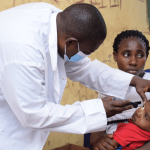
How a single outreach event in Southwest Cameroon improved school attendance, lifted household productivity, and proved that one day of care can change the course of many lives.
Search
How a single outreach event in Southwest Cameroon improved school attendance, lifted household productivity, and proved that one day of care can change the course of many lives.
What does it truly mean to build a community? It is a question that development experts, policymakers, and philanthropists have wrestled with for generations. And yet, the most honest answers rarely come from conference rooms or policy papers.
What happens when education becomes more than lessons learned — when it becomes a space where dignity is restored, silence is broken, and women discover they were never broken to begin with?
The economy of tomorrow is already arriving in Southwest Cameroon — and it speaks the language of technology. This is how we prepare communities for a future that is no longer distant, but present.
Meet the women of Southwest Cameroon who refused to let illiteracy define their futures. These are their stories — raw, real, and radiating with the power of second chances.
In the classrooms of Southwest Cameroon, women who were told their time to learn had passed are proving that wrong — one word, one lesson, one transformed family at a time.
In 1854, a London physician named John Snow mapped the cases of a devastating cholera outbreak across his neighborhood and traced every one of them to a single water pump on Broad Street. His contemporaries believed cholera was caused by bad air — a theory called miasma, which had the advantage of feeling intuitive and the disadvantage of being completely wrong. Snow had data.
There is a carpenter in a village outside Buea who did not exist two years ago. Not the man himself — he has always existed. He was born here. He went to school here, as far as he could go. He grew up watching his parents farm the same narrow strip of land that their parents had farmed, and their parents before them.
It is not the kind of calculation that requires a pen or a spreadsheet. It is the kind that happens in the body — in the hollow space behind the ribs, in the quiet that falls over a kitchen when the pot goes on the fire with less in it than yesterday. She is calculating how to feed four children on what remains.
Imagine a leaking pipe inside a wall. Water is pooling on the floor. Every hour, someone comes with a mop. They clean the floor. They leave. An hour later, the floor is wet again. They come back with the mop.
Picture two villages. Both are struggling. Both receive help. The first village receives a shipment — food, clothing, medical supplies — from an organisation headquartered far away. The shipment arrives. It is distributed. People eat, people are treated, people are clothed.
If you have ever hesitated before donating to a charity — if you have caught yourself wondering whether it actually makes a difference, whether the money truly reaches the people it is meant for, or whether the whole enterprise is somehow misguided , you are not alone.

At Assertive Care Organisation, we believe in the power of hope, education, and opportunity to transform lives. Founded with a deep commitment to uplifting vulnerable communities in Cameroon, we work tirelessly to break the cycle of poverty through health outreach, vocational training, zero-hunger initiatives, and adult education.
Follow me: